A well-managed pasture, a dry lot, and a properly positioned paddock shelter can cover a horse’s day-to-day needs. A stable starts to make sense once greater control is needed:
feeding,
injury recovery,
breeding,
extreme weather, or
managing several horses at once.
What matters most is protection from harsh sun, wind and rain. Good footing. Room to move. Fresh air. And enough control over grazing to keep both horse and paddock in reasonable shape.
Some properties call for a full stable, no question. Others are better served by a paddock shelter or dry lot first. And if there’s already a decent shed or barn on site? Sometimes the smartest option is working with what’s already there.
The starting point is always the horses, the property, and how they’re actually managed.
Before Building a Horse Stable, Work Out What Your Property Can Handle
Walk the property after a decent rainfall. Where does water pool? Which gateway chops up first? Where do the horses naturally congregate? Is one paddock getting hammered by hooves while another barely gets touched?
These are all indicators of what to build, and where to put it.
Pasture health, soil and rainfall control the natural feed supply. How the yard holds water, plus herd size, decides how much usable ground is actually available. Figures for pasture area per horse are useful planning references, not hard rules. A well-managed pasture behaves differently to a smaller block carrying several horses year-round.
In Queensland, a paddock that looks fine through a dry spell can turn into a mess the moment the wet season hits. High-use areas around gates, troughs and feeding points tend to go first. Sometimes the first money needs to go into the ground, not the building.
Where the Rain Goes Can Matter More Than the Building Itself
A horse stable needs to be positioned so water has somewhere to go. Good site preparation gives the stable a stronger foundation and can cut down on ongoing maintenance around it.
The floor and surrounding ground should stay usable through wet conditions. Water needs to be directed away. Never left to collect around stable doors and high-traffic areas. That matters for the building as much as it does for the horse.
Does Every Horse Actually Need a Stable or Barn?
No. A horse doesn’t automatically need an individual stall just because it’s a horse.
Plenty of horses live comfortably outside. They need adequate forage, appropriate turnout and reliable weather coverage. Even a run-in shed lets a horse choose between shelter and open paddock on its own terms.
The decision changes when more management control is needed. A horse recovering from injury may need restricted movement. A performance horse might need individual feeding and somewhere secure before or after work. A mare approaching foaling brings a different set of requirements again. A professional equestrian facility managing many horses has higher demands.
So the useful question isn’t “does a horse need a stable?” It’s “what does this horse actually need to be managed safely and practically?”
When a Portable Paddock Shelter Works Better Than a Horse Stable
If horses spend most of the year outside and mainly need protection from Queensland’s heat and rain, a paddock shelter can make far more sense than a full stable.
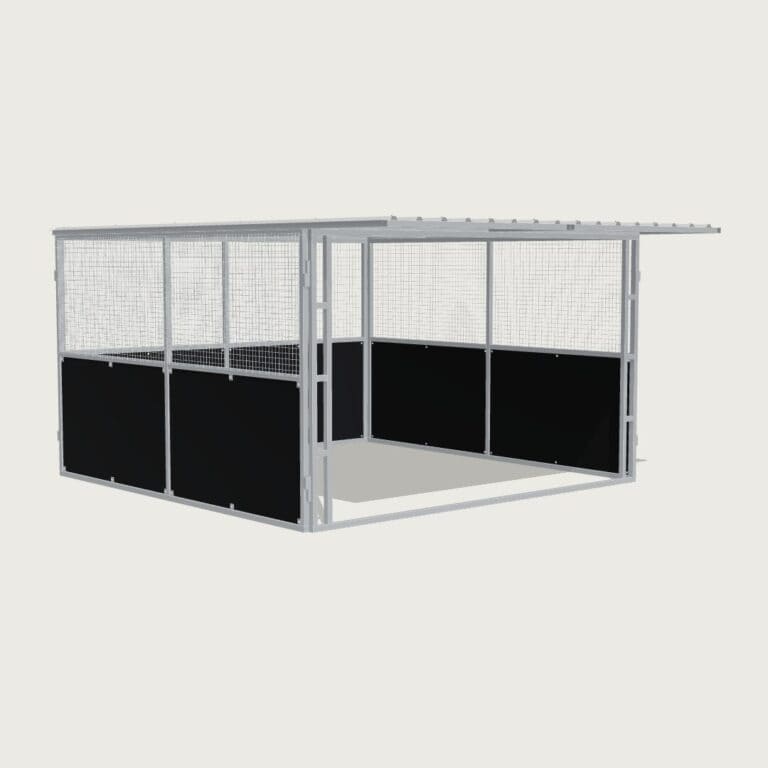
A good shelter does one job well. The horse feeds, roams with the herd, and takes cover whenever it wants. A portable or semi-permanent lean-to also suits properties where the layout might change, offering more flexibility than committing straight to a larger permanent barn.
But a horse shelter still needs proper planning. Prevailing weather, afternoon sun, natural run-off channels and existing horse movement all need consideration before the first post goes in.
Position it badly and the entrance becomes a mud hole. Face it the wrong way and rain drives straight inside. Enclose too much of it and the airflow that made an open layout useful in the first place disappears.
Dry Lots Help Horses Graze Without Sacrificing Every Paddock
Sometimes the real problem isn’t shelter. It’s pasture pressure.
A dry lot or sacrifice area gives horse owners somewhere to keep horses while a paddock is wet, overgrazed or resting. Instead of letting horses keep hammering damaged pasture, one controlled area takes the pressure while the rest of the ground recovers. For smaller properties, that difference can be significant.
It may also help where grass intake needs tighter management, though individual feeding and health decisions should always go through the appropriate equine professional.
A sacrifice area still needs planning:
safe fencing,
solid footing,
sensible hay and feed area
water placement.
If several horses share it, herd behaviour comes into play too. A lower-ranking horse needs enough room to move away from another, rather than getting trapped in a corner or around a feeder.
Get this part right and the paddocks and structures start working as one system. It’s a far better approach than expecting the stable alone to solve every property-management problem.
When a Full Horse Stable with Individual Stall Makes Sense
A full stable starts to make sense once regular, individual horse management becomes the norm.
That might mean separate feeding. Secure handling. Restricted movement. Protection through Australia’s extreme weather. A dedicated space to groom and prepare a competition horse, or somewhere controlled for veterinary treatment and recovery.
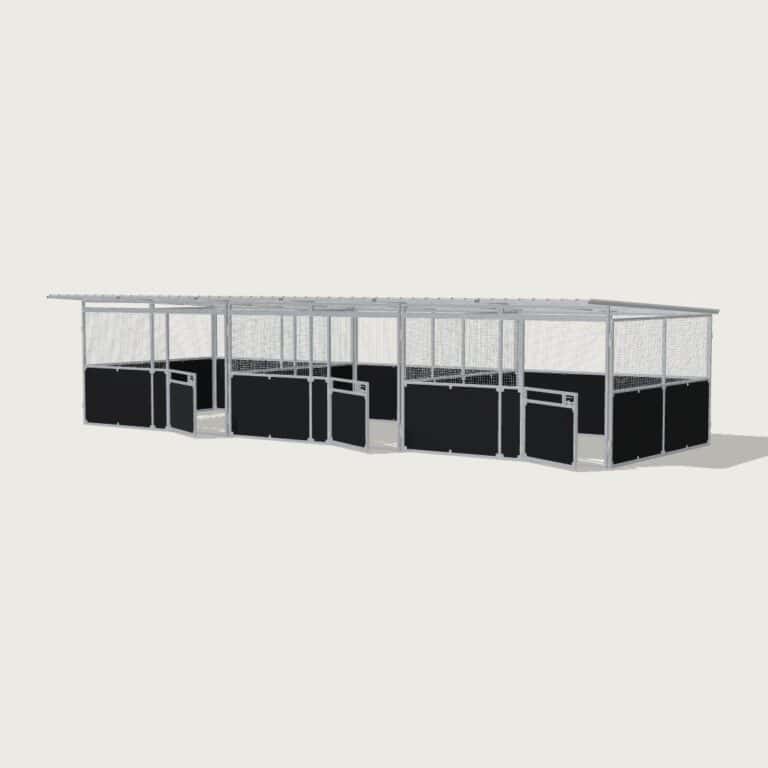
For agistment, breeding and professional equestrian operations, the case gets stronger again. More horses, more people, more daily movement, and individual stable bays that make all of it easier to manage.
But every bay is also another space that needs cleaning, bedding, checking and maintaining. More stalls mean more bedding, more manure, more gates, latches and doors, more time. That doesn’t make a multi-bay stable a bad investment. It just means the number of stalls should come from how the facility actually operates, not how impressive the building looks on paper.
When a Mare and Foal Need More Control
A mare approaching foaling may need a separate stall where she can be monitored and kept away from other horses. A custom design can give the mare and foal more room too, with durable materials and a layout built to reduce the risk of injury during those first days.
Could You Customise an Existing Shed or Barn Into a Horse Stable?
Before building a new structure, it’s worth looking at what’s already there. An existing barn, machinery shed or garage-style rural building may have enough ceiling height and floor area to become a working horse stable.
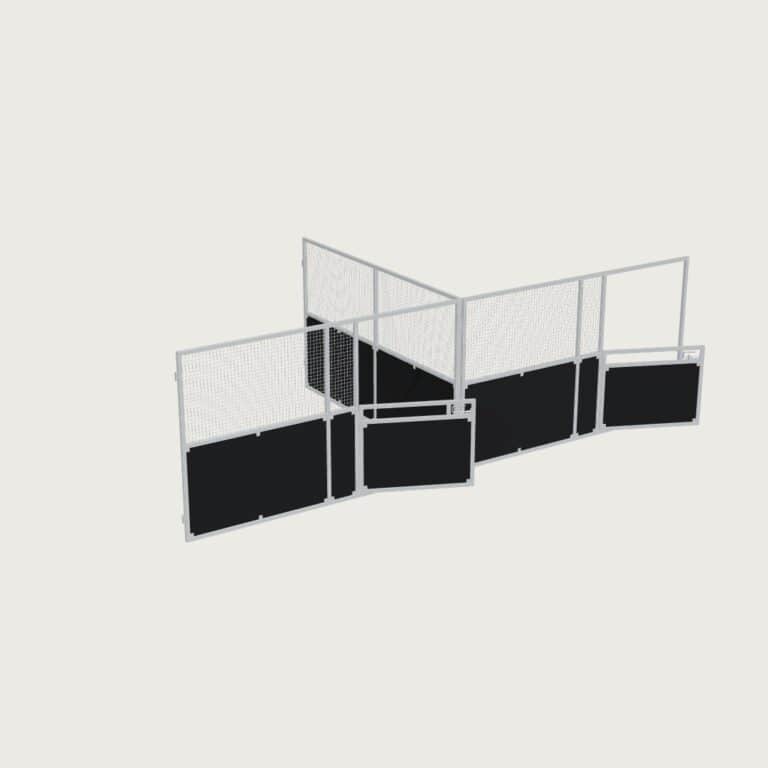
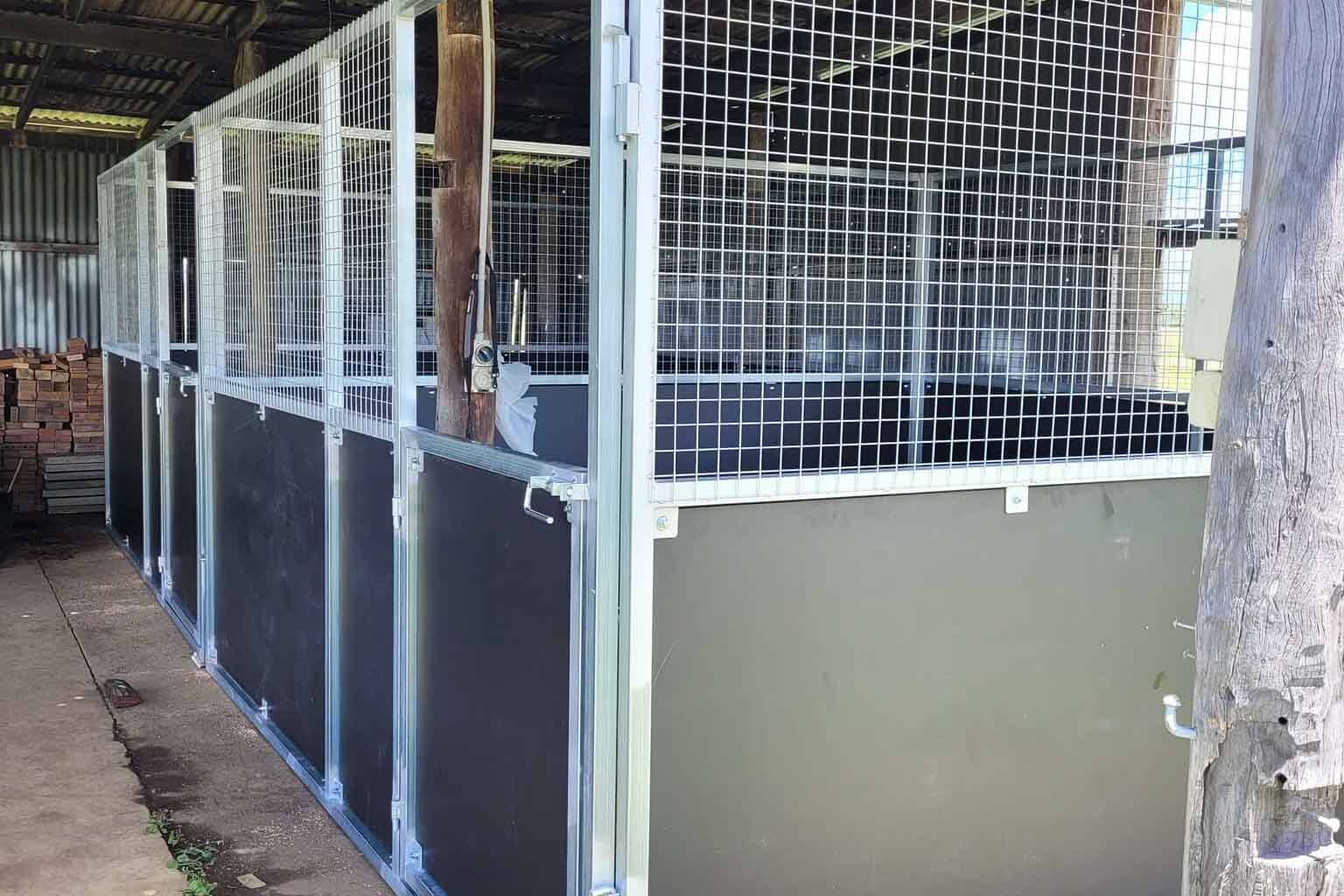
That’s where retrofit stable systems come in. Rather than replacing the whole building, fabricated internal panels can divide an existing structure into individual bays. Depending on the shed, the design can incorporate stalls, gates, mesh sections and stall doors while keeping the original external structure intact.
The investment goes into the part the horses actually interact with, not into replacing a perfectly serviceable roof and frame.
Not every shed should become a stable, though. Structural condition, ventilation, floor condition, insulation for climate control, vehicle and horse access, natural light and the dimensions available for each stall all need assessing first.
Indoor Stable Shed Conversion Samford Valley QLD
A Samford Valley shed was converted into two enclosed 4m x 4m horse stables using a modular steel panel system, completed in just one day. Panels were custom-fitted to the existing structure, with sliding gates, ply kickboards and mesh upper panels ensuring airflow, safety and a cost-effective alternative to new stable construction.
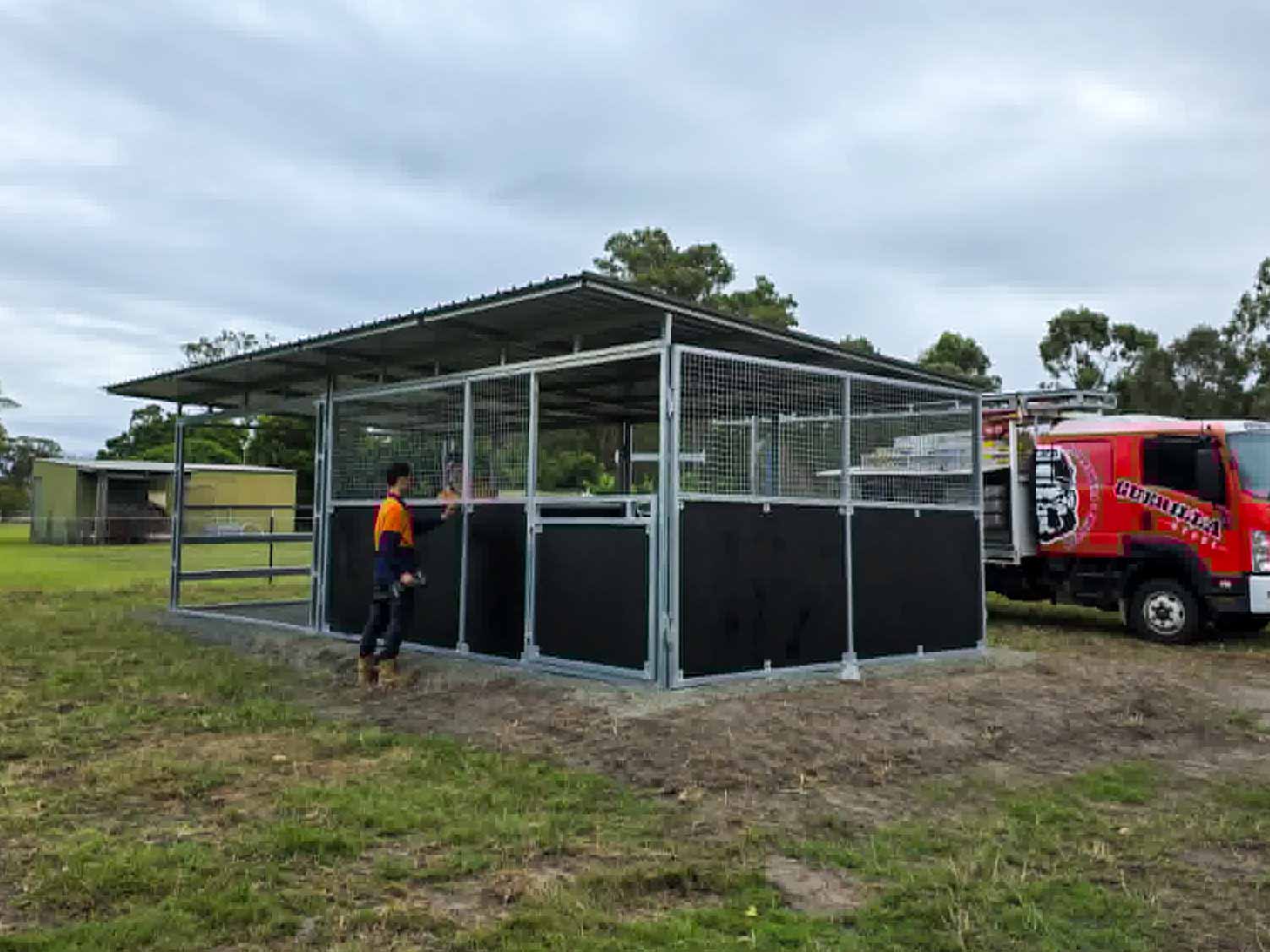
A 9m inline structure combining a Large stable module and Standard shelter into one build. The enclosed stable end suits box rest or float-day horses, while the open three-rail shelter allows free roaming access. Matching 4m depths let both bays share a continuous High Airflow roof, with a new 1500mm gate for easier handling.
What Horse Owners Compare in a Stable, Shelter, Dry Lot or Equestrian Setup
Once the building itself is out of the way, the choice comes down to how the horse is managed day to day. The right balance depends on the horse, the land, and how much daily management is realistic.
Four things tend to make the difference:
Horse freedom: A stable gives the most control. But it restricts movement. An open structure connected to pasture gives the horse far more choice. Dry lots and day yards sitting somewhere in between.
Daily workload: Stables need regular mucking, bedding and turning horses in and out. Shelters cut down on stall work. Though the paddocks still need managing. Dry lots and yards need manure removal and footing maintenance.
Pasture and mud: Dry lots and day yards take pressure off wet or overgrazed paddocks. A pasture-and-shelter setup relies on having enough usable land, well managed.
Feeding and health management: Stables, dry lots and day yards give horse owners more control over feed intake and monitoring. Open pasture gives horses more freedom to graze. But less individual control.
What you’re comparing
Horse stable
Paddock shelter
Dry lot
Day yard / pen
Horse freedom
Lowest. Individual confinement
Highest. Moves between pasture and refuge
Moderate to high, depending on size
Moderate. Individual outdoor space
Management control
Very high
Lower
High
High
Daily labour
High. Mucking, bedding, turnout
Lower stable workload; more pasture management
Moderate. Manure and footing
Moderate. Manure, feeding, footing
Pasture protection
High while stabled
Depends on stocking and management
Very high
High
Feeding control
Very high
Lower, less restricted
High
High
Weather protection
High
Good when properly positioned
N/A
N/A
Ability to move
Limited inside stall
High
Higher than a stall
More than a stall, less than a paddock
Best fit
Horses needing regular individual management
Horses living mainly at pasture
Grazing control and pasture protection
Individual outdoor management
More control generally means more infrastructure. Plus more daily work. More freedom generally means the property carries more of the load itself.
Good pasture and drainage, with enough land, make a shelter-based setup easier. Limited acreage, individual feeding, controlled movement or intensive management push the decision towards dry lots, day yards or stables.
Which Setup Matches How You Actually Manage Your Horses?
Three questions narrow the choice quickly.
How much freedom can the horse have? If it can live mainly at pasture, a good canopy or awning can cover some housing needs on its own. Need to limit feed or field time? A dry lot or day yard does that job. Regular confinement and individual management point towards a stable.
How much daily work makes sense to create? Mucking stalls. Replacing bedding. Moving horses. Collecting manure. Checking footing and managing paddocks all take time. Different setups shift that work around rather than removing it.
What’s actually being protected? If it’s the horse from the weather, start with shelter. If it’s the pasture, look at a dry lot or day yard. If it’s feed intake or individual management, a yard, dry lot or stable offers more control.
Plenty of properties end up using more than one structure. A stable with attached day yards. A dry lot paired with a paddock shelter. A pasture turnout backed up by a stable for injury or extreme weather. The useful setup is the one that matches how the property actually runs.
Modular Horse Stable Design Lets You Add More Stalls When You Need Them
The final version of a property doesn’t need to exist on day one. If pasture and a simple pavilion cover current needs, that’s a fine place to start. A dry lot or day yards can be added if pressure on the land increases. Custom equine structures can come later if horse numbers or management needs change.
If you are leaning towards fully equipped horse stables, a modular design works the same way. First build the number of bays needed now. And leave room to expand or add wash bays and a tack room later. That avoids paying for empty stalls. Plus it avoids locking into a layout that can’t grow when the property does.
Paddock Shelter, Retrofit Barn or Custom Horse Stable? Use the Management Test
f the main problem is weather exposure. A well-positioned paddock shelter may be all that’s required. If the main problem is a damaged pasture. Drainage, access and movement need attention. A dry lot or sacrifice area might be worth considering. Especially before assuming another stable is the answer. If there’s already a suitable barn or shed, a retrofit is worth investigating. Its better than over paying for a whole new building.
Regular individual feeding and separation, makes dedicated horse stalls easier to justify. Same with monitoring or the need to control movement.
Managing many horses shifts the thinking to the entire equestrian facility. A complex designed to suit horse and handler movement, and future expansion. If you expect horse numbers to change, that points towards a modular system. Or even portable stables that can be reconfigured.
The Right Horse Stable Is Built Around Your Horses and Property
Sometimes the right first investment is drainage. Sometimes an existing shed becomes a a a great stable. The right internal fit-out makes is highly functional. And sometimes the daily workload make a dedicated multi-bay stable the best choice.
Guerilla Steel’s stable systems are fabricated in Yatala, Queensland. We use structural steel components built to suit Australian properties. Built for horses and the way owners actually use them.
Horse owners who aren’t sure can send through a rough layout. Share current horse numbers and what might change over the next few years. Guerilla Steel will help work through what makes sense. Starting with the right stable rather than the biggest one.
If you have any Stable Buying Questions or want something custom, Give Morgan a call on 0405 538 413, email guerillasteel@gmail.com


 GS-143 / November 2025