No products in the cart.
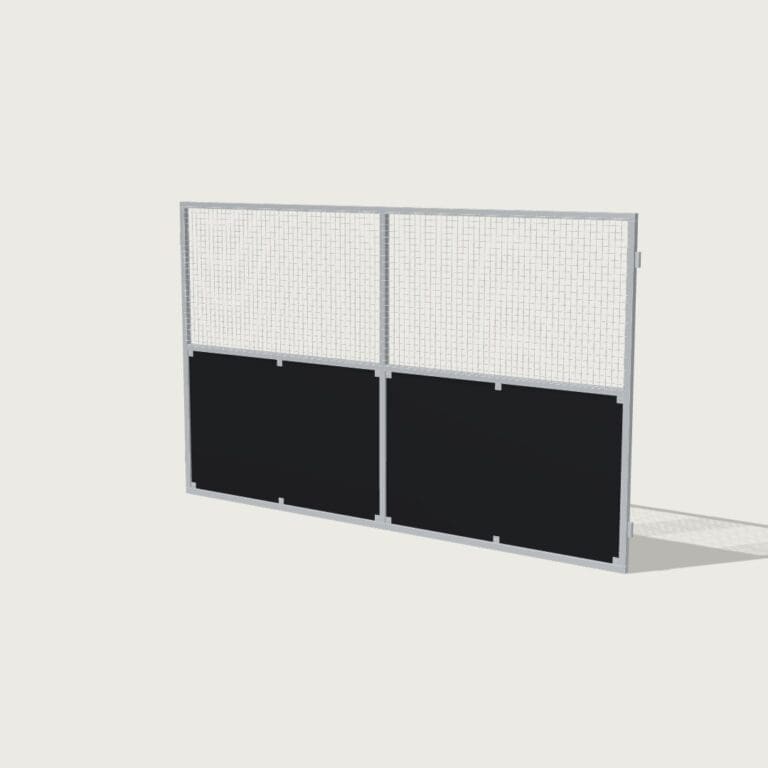
Large, Standard
GS-PAN-SR-PM-4
Side/Rear Stable Shelter Panel 4m Ply Mesh Combo
Dimension
$1,210.00

Compare plywood, marine ply, HDPE, rubber, and recycled composite for stable kickboard inserts. Learn about moisture resistance, impact performance, maintenance, and replacement needs. Each material is assessed for its suitability in Queensland and NSW stable conditions.
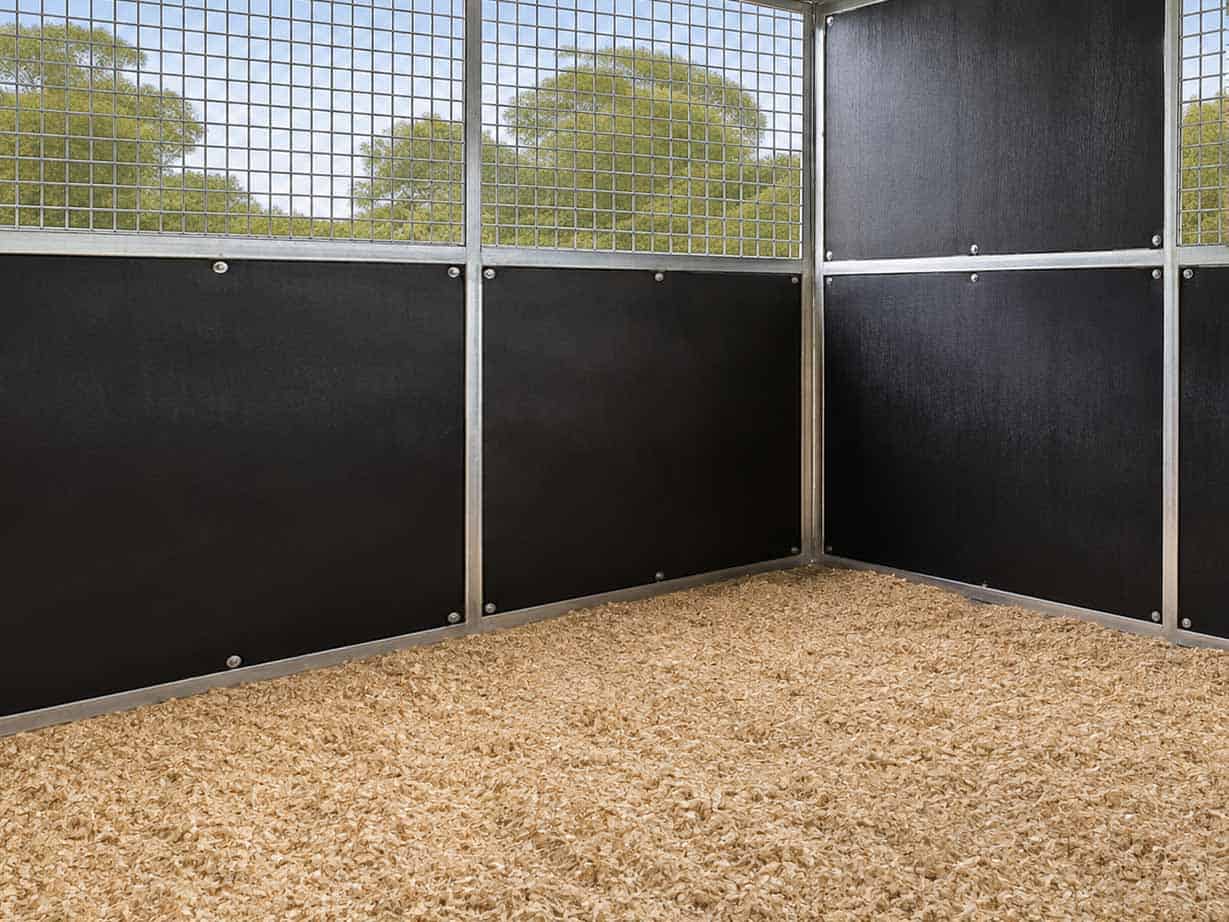
Plywood, marine ply, HDPE, rubber, and recycled plastic composites each respond to those conditions in their own way. There isn’t one material that wins every comparison. Some resist moisture better, and prevent warping. Some materials absorb impact better. Some are preferred for stall safety. Some cost less. Others require less maintenance.
The insert inside a prefabricated horse panel does a fairly hard job. It gets kicked, rubbed against, washed down and exposed to moisture, dirt and stable waste. In Queensland and northern New South Wales, humidity adds another consideration.
A manufacturer doesn’t make a prefabricated horse panel from one material.
The frame provides the main structure. The stable kickboard creates the solid barrier between the horse and adjoining stables. Depending on the panel design, mesh, bars or another open section can sit above it.
The frame and the lower insert wear at different rates.
A well-made steel frame can remain serviceable while a lower horse kick board gets scratched, chewed, kicked or damaged by moisture. If the panel has a replaceable insert, you can deal with wear by swapping out the insert.
And that’s worth considering when comparing materials.
| Material | Moisture Resistance | in Characteristics | Maintenance | Replacement |
|---|---|---|---|---|
| Plywood / form ply | Moderate; edges and damaged surfaces need attention. | Rigid; can crack or splinter under severe. | Moderate. | Straightforward to source, cut and replace. |
| Marine ply | Higher than standard ply. | Rigid and strong; severe impact can still damage it. | Moderate. | Similar working methods to other plywood. |
| HDPE | Very high. | Impact resistant with some flex. | Low. | Replaceable. Thickness and support must fit the arena kick wall. |
| Rubber | Material itself handles moisture well. Installation can trap moisture behind it. | Walls absorb High impact. | Low surface maintenance, but installation needs inspection. | Can be heavier and more involved to remove. |
| Recycled plastic/composite | Very high. | Impact resistant; performance varies by product/profile. | Low. | Depends on board profile and fixing system. |
| Phenolic/film-faced ply | Higher surface resistance than untreated ply. | Rigid; coating can wear or become damaged. | Low–moderate. | Generally straightforward. |
That’s the short version. The differences become apparent when you know where the stable is going and how it’s actually going to be used.
Plywood is common in stable construction for a pretty straightforward reason. It’s readily available, relatively inexpensive and easy to work with.
Plywood is still timber. Moisture can cause problems if it gets to the core often, especially through exposed or damaged edges. This can lead to swelling and delamination. Stable environments aren’t particularly kind to timber either. Humidity, wash-down water, urine and ammonia all have to be considered.
Impact is another variable. Ply provides a firm wall protection. Although a sufficiently hard kick can crack or splinter a board.
That doesn’t automatically make plywood a poor stable material. It means you need to think about it as a component that can be inspected and, eventually, replaced.
That’s one of ply’s practical advantages. You don’t need a specialist plastic fabrication process to make another insert. Sheet material is widely available and can be measured, cut and fitted using familiar tools.
For owners who can handle regular checks and occasional replacements, it’s pretty easy to extend the service life.
Marine ply is a strong alternative. It solves some problems of ordinary plywood.
Australian marine plywood made to AS/NZS 2272. It uses better materials for tough moisture conditions. Its waterproof adhesive make it more resistant to delamination.
But there’s an important point to note. High-Grade Marine ply is moisture-resistant, but it’s not plastic.
Cut edges and surfaces still need protection. Damage exposing the timber allows moisture to enter. It can also suffer from a severe horse kick.
This option is great for owners who want the familiarity and strength of timber. And when prioritising moisture resistance.
The downside is cost. You will pay much more for this material than for basic plywood or some form-ply products.
HDPE (high-density polyethylene) takes timber’s biggest weakness largely out of the equation.
It doesn’t absorb water in the way plywood does. It won’t rot, and there’s no timber core waiting to swell or delaminate if the surface gets wet.
That’s an obvious advantage in humid climates and regularly washed-down areas.
Maintenance is also simple. HDPE doesn’t need painting or sealing and its smooth surface is relatively easy to clean.
Impact behaviour is different from plywood. Rather than behaving as a completely rigid board, HDPE can have some flex. The amount depends on the grade, thickness, panel dimensions and how it’s supported by the surrounding frame.
That last point matters significantly in the context of equestrian safety and performance in high-impact zones.
Calling something an “HDPE insert” doesn’t tell you how it’ll perform when a horse kicks it against the stall wall . A thin sheet and a properly supported, thick board aren’t the same thing.
HDPE also tends to cost more once you’re comparing appropriately thick board stable inserts.
Still, for owners who put high moisture resistance and low maintenance near the top of the list, it’s an option worth considering.
Rubber changes the conversation because its main strength isn’t rigidity.
It’s cushioning.
A quality rubber lining can absorb more energy from a hoof kick than a hard timber or plastic surface. That’s why rubber is widely used around equine facilities where impact and footing are concerns.
But putting rubber on a partition wall needs more thought than simply attaching a mat.
The rubber itself is water resistant. The space behind it is the issue.
If moisture, wash water or urine gets behind poorly fitted rubber and can’t drain or dry, you’ve created an area that’s difficult to inspect and clean. Seams, fixings, structural wall preparation and drainage therefore matter.
Rubber is also heavy. That’s manageable, but removing and replacing a large rubber section isn’t quite the same job as cutting another sheet of ply.
For some horses and facilities, those trade-offs make sense. For others, they don’t.
This category needs a little care because “composite” can describe quite different products.
Recycled polyethylene boards and plastic lumber products can offer many of the moisture advantages of HDPE. They don’t rot like timber, don’t need painting and can perform well in humid environments.
Some products are manufactured as tongue-and-groove boards rather than large sheets. That can change both impact behaviour and how individual damaged sections are replaced.
There can be some flex under load, which again isn’t automatically good or bad. It depends on the profile, thickness, span and how the stable frame supports the material.
Availability is another consideration.
Standard plywood can be sourced from timber and building suppliers almost anywhere. A particular recycled-plastic profile may need to come from a specialist supplier. That’s worth knowing before committing an entire facility to one product.
Film-faced or phenolic plywood sits somewhere between ordinary plywood and the plastic options. It’s still plywood.
The difference is the resin-impregnated surface. This gives the face better resistance to moisture. It makes it easier to clean than untreated timber. That’s useful in a stable.
The weak point remains the edges and any area where the surface coating has been damaged. Repeated rubbing and kicking can wear the film. Sharp edges still need appropriate protection to reduce injury risk.
It’s a useful middle-ground material. You get a relatively economical timber panel with a more resistant surface.
Just don’t confuse film-faced with completely waterproof.
A stable wall doesn’t have to be standing in water to experience moisture problems.
There can be humidity, condensation, wash-down water, urine or wet bedding. And periods where surfaces simply don’t dry as quickly as you’d like.
That’s particularly relevant through humid parts of Queensland and northern or coastal NSW.
So “water resistant” doesn’t tell the whole story.
You need to consider the material, its edges, how it’s fixed and what happens to water around or behind it.
This is another comparison that can become misleading. There isn’t enough directly comparable equine impact-test data to declare Material A is “safer” than Material B.
A material can be highly resistant to impact without being particularly soft. Another can absorb considerable energy but require a more complicated installation.
And in a real stable, the insert isn’t working alone anyway.
Thickness matters. So does the span between supports. The frame around it, fixing method, condition of the material both contribute to resistance. The behaviour of the individual horse in the horse barn is also a factor.
If you’ve got a known kicker, tell your stable manufacturer. That’s more useful than relying on a generic material label.
Horse stable materials wear out. A horse can damage something that should last for years. A loader might hit a wall. Water can seep into unwanted areas. An edge can break down.
So, ask yourself before choosing the insert:
If the insert can be removed from the stable frame, replacing it can be easier than swapping the entire horse panel.
None of this makes one material better.
It just changes what ownership looks like after installation.
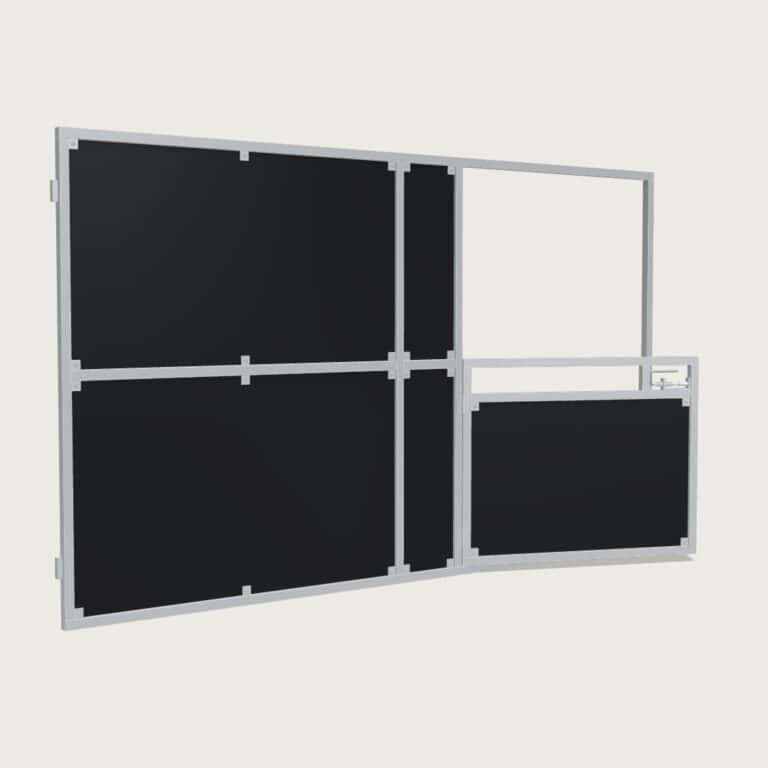
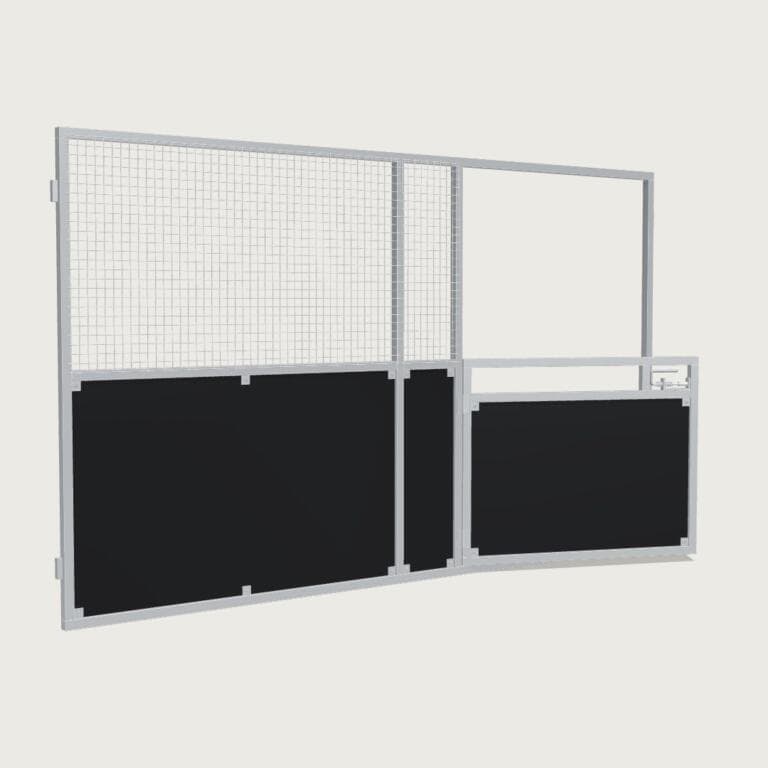
Our prefabricated horse stall components are designed for easy assembly and durability. Guerilla Steel horse stable panels come standard with plywood lower-panel inserts.
The reason is fairly uncomplicated. Ply keeps costs down and does the job we need. It’s easy to find and simple to replace if an insert gets damaged later.
The steel frame is the main support for the panel. The insert is a part that can be replaced. If a piece of ply gets damaged, you can remove it, cut a new piece, and replace the insert. This way, you don’t need to discard a good panel.
For those who want HDPE, we can discuss that. You can order suitable HDPE to fit as a replacement, depending on the material, thickness, and panel design.
Different property. Different horse. Different priorities.
Start with the conditions rather than the material name.
There’s no need to make the decision about horse stall materials more complicated than it is.
Look at moisture. Look at the horse. Consider maintenance. Find out what replacement involves. Then compare the cost. That’s a much more useful way to choose an indoor arena kick board than asking which material is simply “best”.
If you’re planning new stables or converting an existing shed, tell us how the space will actually be used.
Your location, the stable’s exposure, your cleaning methods, and a horse that damages walls can all influence your decision.
Ask us about standard ply inserts, replacement panels, or other insert options for your build.
If you have any Stable Buying Questions or want something custom, Give Morgan a call on 0405 538 413, email guerillasteel@gmail.com
700 downloads · last download 2 hrs ago
No spam — just expert tips, offers, and updates from your local stable builders. View our Privacy Policy.