No products in the cart.
Large, Standard
GS-PAN-SR-PP-4
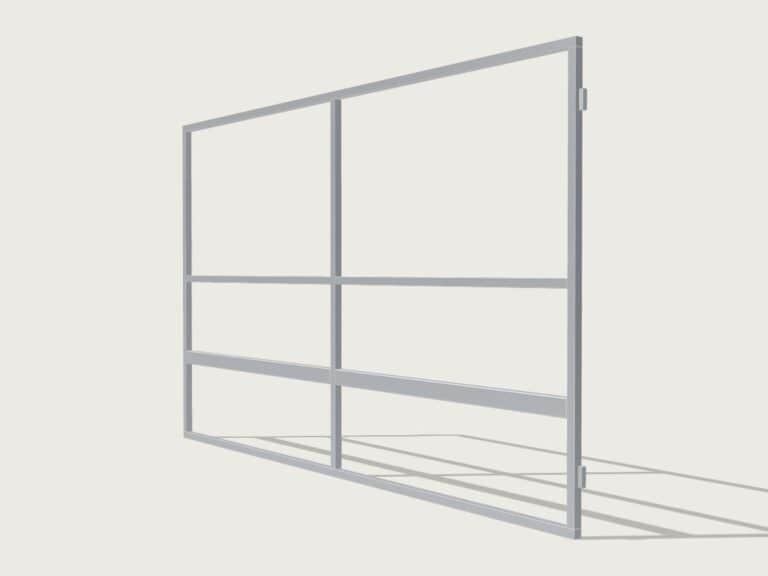
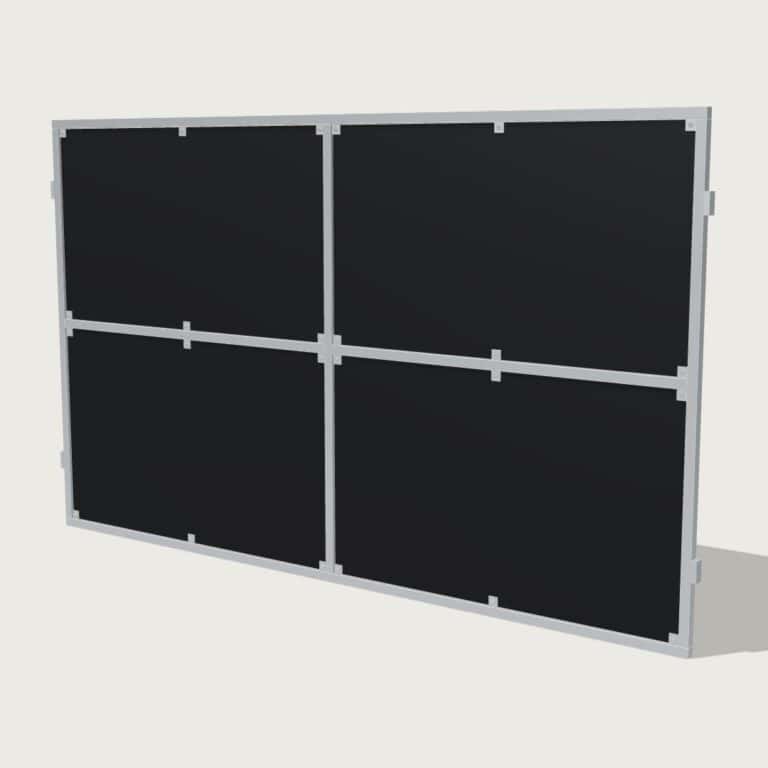
Side/Rear Stable Shelter Panel 4m Full Ply
Dimension
$1,430.00

Steel doesn’t cause overheating in horse stables, poor design does. Learn how airflow, internal height, orientation, mesh panels, door placement and drainage work together to keep Queensland stables cool and dry through summer heat and storms, plus a practical checklist for assessing your existing stable’s ventilation performance.
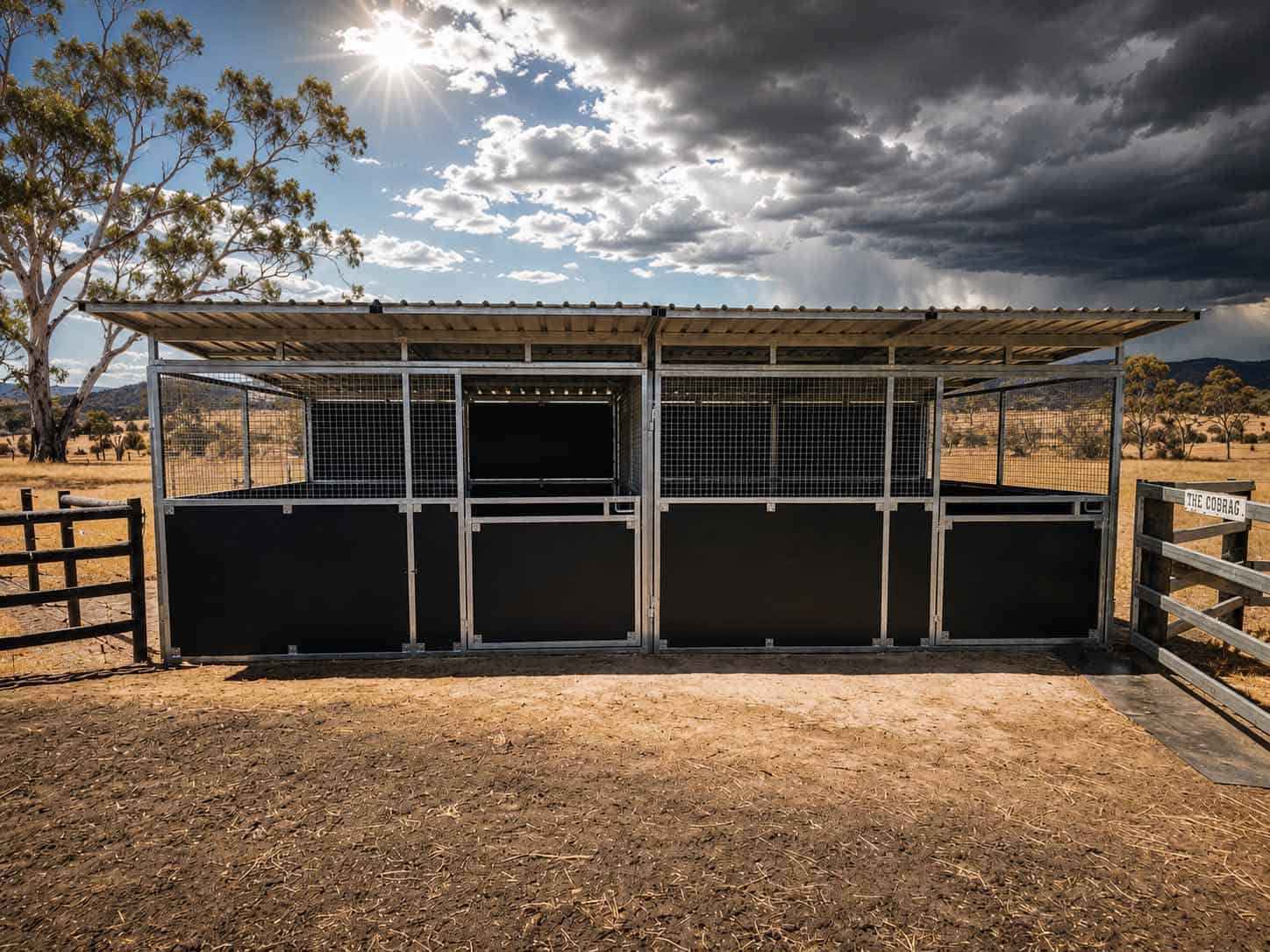
A horse can stay comfortable in a steel stable during Queensland summers if the structure is tall, well ventilated and set up to handle both heat and storms. The content stresses that low rooflines, solid partitions and poor drainage create the hot, stale conditions that cause problems. Fans can help, but they should support a building that already breathes properly.
Steel isn’t the deciding factor. Airflow, internal volume, orientation, openings and moisture management are. A badly designed steel stable can certainly become extremely hot. So can a poorly ventilated timber stable or converted farm shed.
The unique challenges for horse owners in Queensland are that a stable needs to handle both intense UV exposure and summer heat, then provide practical weather protection when Queensland’s storms and wind-driven rain arrive. Well-designed Queensland horse shelters use structural steel, adequate roof height and an open design where
appropriate to maintain airflow without compromising horse safety during variable weather conditions. Good design and manufacture also considers roof overhang, drainage and protection from UV damage, particularly in exposed rural Australian and coastal areas.
For horse owners, the aim is simple: an Australian-made stable that provides dependable shelter during storms without becoming a fully enclosed hot box when summer returns.
A horse can overheat in a poorly designed steel shelter. But the problem isn’t simply that it is made from steel. The bigger issue is trapped heat.
A steel complex designed with good airflow, adequate internal height, open ventilation paths and sensible door placement can remain comfortable through hot Australian weather. Get those basics wrong and almost any enclosed bay can become hot, humid and unpleasant.
For horse owners stabling horses in summer — particularly through Queensland’s hotter, more humid months — ventilation needs to be part of the structure from the beginning.
Anyone who has touched steel roofing in full summer sun knows how much heat it can absorb.
So the concern makes sense.
But roof temperature and the conditions around your horse aren’t the same thing. Its whether that accumulated heat has somewhere to go. Hot air naturally rises. If the stable has enough height and a clear path for warm air to escape, cooler outside air can replace it. This ensures that heat stress is minimized.
Block that movement with low rooflines, solid enclosed walls and poor openings and heat hangs around.
Add a horse producing body heat, damp bedding and Queensland humidity, and conditions can become uncomfortable quickly.
We need to design the full structure around an airflow system.
A large doorway doesn’t automatically mean good ventilation. You need air coming through any rural steel structure. Plus somewhere for warmer air to get out.
Good natural ventilation generally works across different levels of the stable. Lower and horse-level openings bring fresh air through the occupied area, while higher openings give rising warm air somewhere to escape.
Depending on the layout and any custom horse panel design, that can come from:
The exact combination will change with the site.
An exposed ridge in regional Queensland has a very different airflow problem from one tucked beside an existing shed or surrounded by trees. And more wind isn’t always better.
You want steady air exchange through the whole unit, not a wind tunnel throwing rain onto bedding every time a storm rolls through.
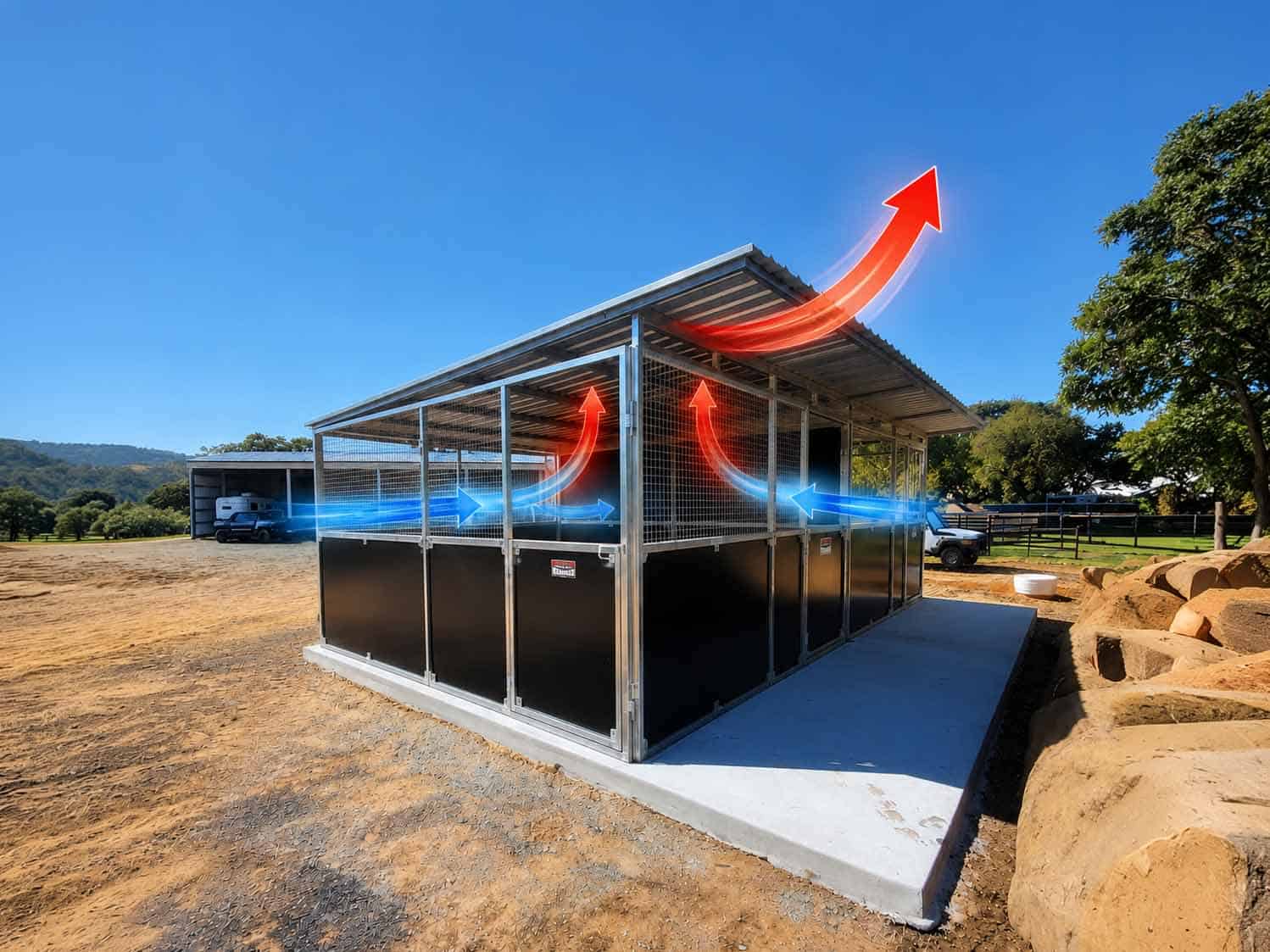
There isn’t one magic vent size that works for every stable.
Research into horse stable ventilation commonly discusses roughly 4–8 air changes per hour under temperate conditions, with higher ventilation requirements when conditions become hot and humid.
Some hot-climate guidance pushes that towards 8–10 air changes per hour for permanently stabled horses.
That sounds technical, but the practical principle is straightforward.
The air inside shouldn’t sit there.
Heat, humidity, dust and ammonia need to leave the stable while fresh outside air replaces them. Ideally, that happens continuously rather than only when somebody opens the main doors.
If you walk into the stable on a hot day and immediately notice stale air or a strong ammonia smell, something isn’t working properly.
Your horse has been breathing it much longer than you have.
This is one reason we’re cautious about converting any low farm shed into a horse stable without looking at its dimensions first.
Heat rises. So do moisture and contaminants carried in warm air.
Give that air some room above the horse and a way out, and natural ventilation can do a lot of the work.
Guerilla Steel use a minimum 2.4 metre height, with the design allowing airflow to be considered alongside horse clearance and everyday use.
Higher-volume structures and roof ventilation can improve that process further, particularly across multi-bay stable runs.
What you don’t want is a horse standing beneath a low metal roof with solid walls around it and almost nowhere for accumulated heat to escape.
That’s when a it starts feeling like a hot box.
Yes. A larger internal volume gives heat, moisture and stale air more space to disperse before being removed through the ventilation openings.
For a single horse, the floor area needs to suit the horse’s size while allowing it to stand, turn and lie down comfortably. A 3.6m x 3.6m minimum is a common horse industry standard. Larger horses may need more room.
This becomes even more important when housing multiple horses. Multiple smaller shelters, fully enclosed bays with solid partitions can restrict crossflow, while mesh upper panels, breezeways and an open design can help air move through the larger stable structure.
So don’t choose stable dimensions on floor space alone. Horse size, internal volume and ventilation need to work together, particularly through Queensland’s summer heat and humid wet season.
High-level ventilation handles rising hot air, but we also want fresh air moving through the area the horse actually occupies.
This is where open or mesh sections become useful.
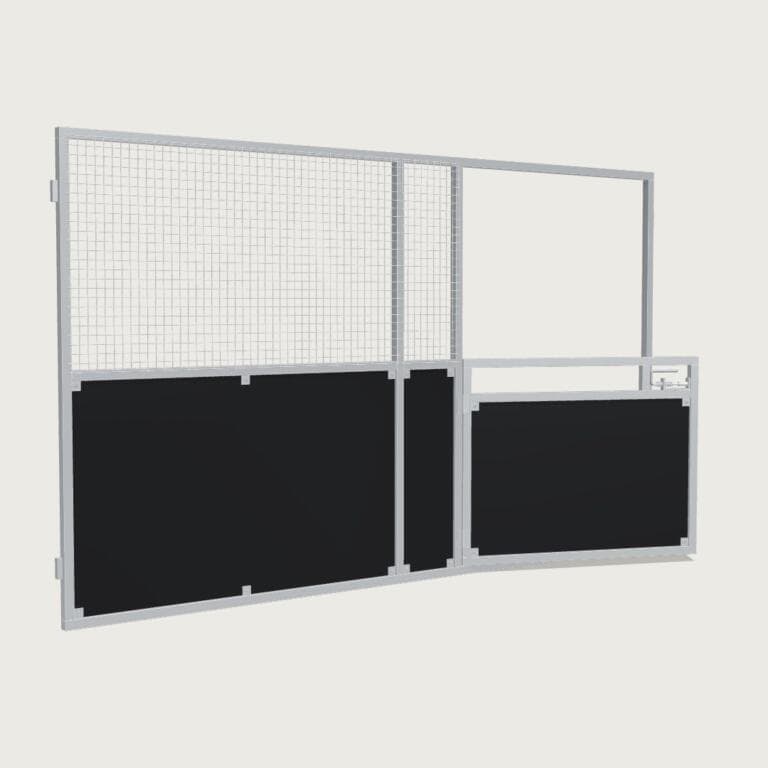
A ply/mesh combo, for example, gives you a solid lower section where protection and separation are needed while leaving the upper area more open.
That can help air move between adjoining bays rather than treating each equine area separately.
It also matters in a larger modular run.
You can have a beautifully ventilated roof and still create stagnant pockets if every internal partition is completely solid.
Think about the full route the air takes.
Where does it enter?
Where does it pass the horse?
And where does it leave?
Those three questions tell you far more than simply asking whether there is a vent.
Stable doors are usually discussed as an access and safety feature.
They’re also a very large ventilation opening, ideally at least 1.2m high.
An appropriately positioned open doorway can create significant crossflow, particularly when there’s another opening on the opposite or adjacent side of the structure.
But position matters.
Put every opening directly into your strongest prevailing weather and you may get fantastic airflow right up until sideways rain is soaking the bedding.
We normally suggest looking at prevailing winds before settling on the stable position and orientation. Use natural breezes where they help, while retaining enough solid protection to keep the horse sheltered when conditions turn.
For larger setups, breezeways can be particularly useful because you’re creating an intentional air path through the building rather than hoping air finds its own way around enclosed bays.
Flooring tends to get left out of conversations about keeping horses cool during summer heat.
It shouldn’t.
A wet stable is harder to keep fresh.
Urine, damp bedding and poor drainage add moisture to the air, exacerbating heat stress. In hot conditions, particularly with high humidity, that can make an already stuffy equine environment even worse. It can also contribute to ammonia build-up.
The first job is keeping outside water out.
Your stable should be positioned on a well-drained site rather than sitting in a low point where stormwater runs towards it. A raised, compacted base or correctly prepared slab can both work depending on the site and installation.
Then think about what happens inside.
The surface needs to remain solid under the horse, drain appropriately and be practical to clean. Rubber matting over a correctly prepared base is a common option because it gives the horse a more forgiving surface while making management easier.
What you don’t want is water or urine pooling underneath bedding with nowhere to go.
Ventilation and drainage are doing different jobs, but they’re solving the same broader problem: keeping the stable dry, fresh and comfortable.
Fans can absolutely help during severe summer conditions.
They shouldn’t have to rescue a bad building.
A fan moves air. It doesn’t automatically provide fresh air, and it can’t fix where hot air has no sensible escape path.
That’s an important distinction.
Start with passive ventilation: height, openings, mesh sections, orientation, eaves, ridge ventilation where appropriate and crossflow.
Then mechanical ventilation can be added where the climate, configuration or management needs justify it.
This also gives you a stable that continues to breathe when the fan isn’t running or the power goes out.
You don’t need an engineering report to spot the obvious warning signs.
Walk through the stable during the hottest part of the day and pay attention to what you actually feel and smell.
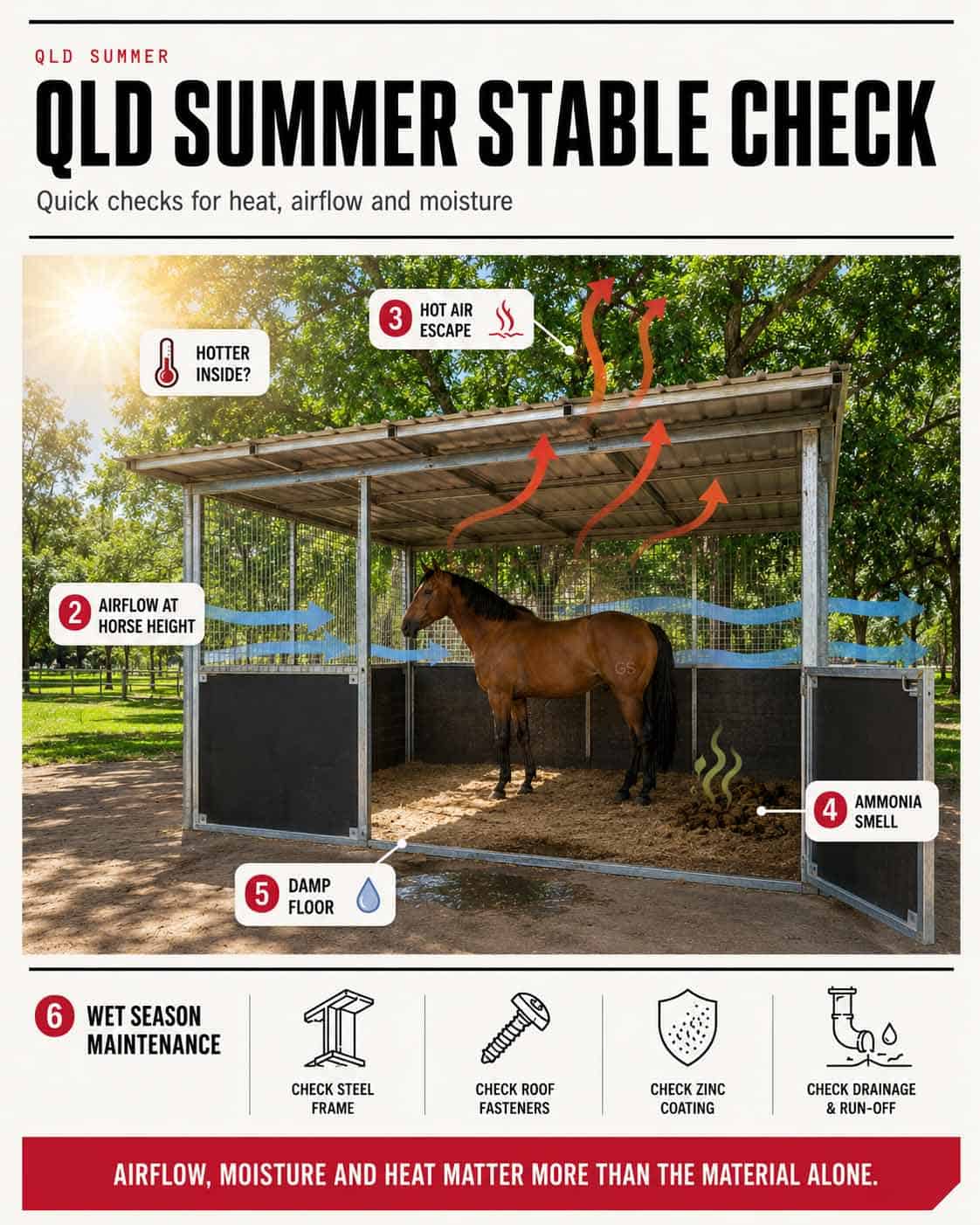
Ask yourself:
Some temperature difference beneath a sun-exposed roof isn’t surprising. Heavy, trapped heat with almost no air movement is another matter.
If the only air movement is high above the horse, look at whether solid partitions are blocking crossflow.
If you can’t identify an obvious high-level exit path, that’s worth investigating.
A strong ammonia smell isn’t something to accept as normal just because horses are stabled there. Look at bedding management, drainage and ventilation together.
Persistent moisture is another clue that the stable environment isn’t working as well as it should. And finally, check the bays at different times. A setup that feels fine at 8 am can be completely different at 2 pm after hours of direct sun.
A well-built equine facility shouldn’t need frequent maintenance, but a quick inspection before Queensland’s wet season is worthwhile. Check structural steel, roof fasteners and any zinc coating for damage or early corrosion, particularly around exposed edges and high-moisture areas. Among the different horse shelter options, galvanised steel can offer good long-term usability with minimal maintenance when drainage and ventilation are working properly.
There isn’t one accessory that makes a stable suitable for Queensland’s climate.
You want enough internal height for warm air to rise. You want fresh air entering around the horse and hot air leaving higher up. You want doors and openings positioned to take advantage of useful breezes without exposing the stable to every storm.
And underneath it all, you want a dry, well-drained base that isn’t adding unnecessary moisture to the environment.
This is especially important in Queensland. The heat and humidity often arrive at wet season rainfall. You often get the uv radiation and severe storms together.
Simply creating more shade doesn’t solve humidity or stale air.
The stable has to breathe.
A 3-bay modular stable was designed with a custom extended roof to connect and shelter both the horse bays and an existing shipping container. Covering around 62 m², the structure provides shade, airflow and a protected working area for feeding, tack storage and daily horse management, all in one compact, cost-effective setup.
See the Guerilla Steel Build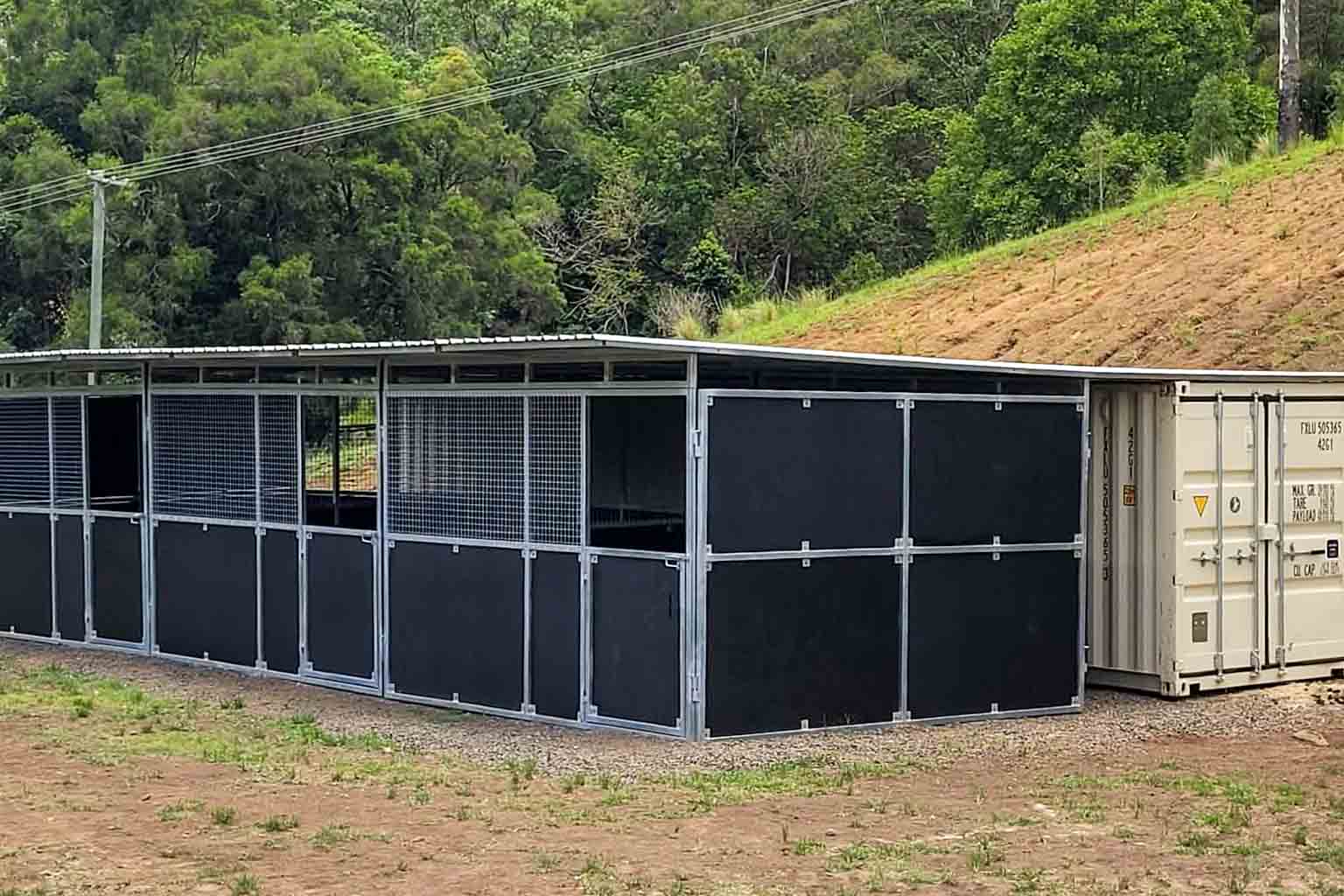 GS-130 / February 2026
✦ Customised
GS-130 / February 2026
✦ Customised
An 8m x 4m High Airflow paddock shelter built without an internal divider, creating one continuous 32m² open-front space instead of two separate bays. Featuring a pitched roof for rain runoff, three-quarter ply with mesh above for light and durability, all installed on a gravel pad in a single day.
See the Guerilla Steel Build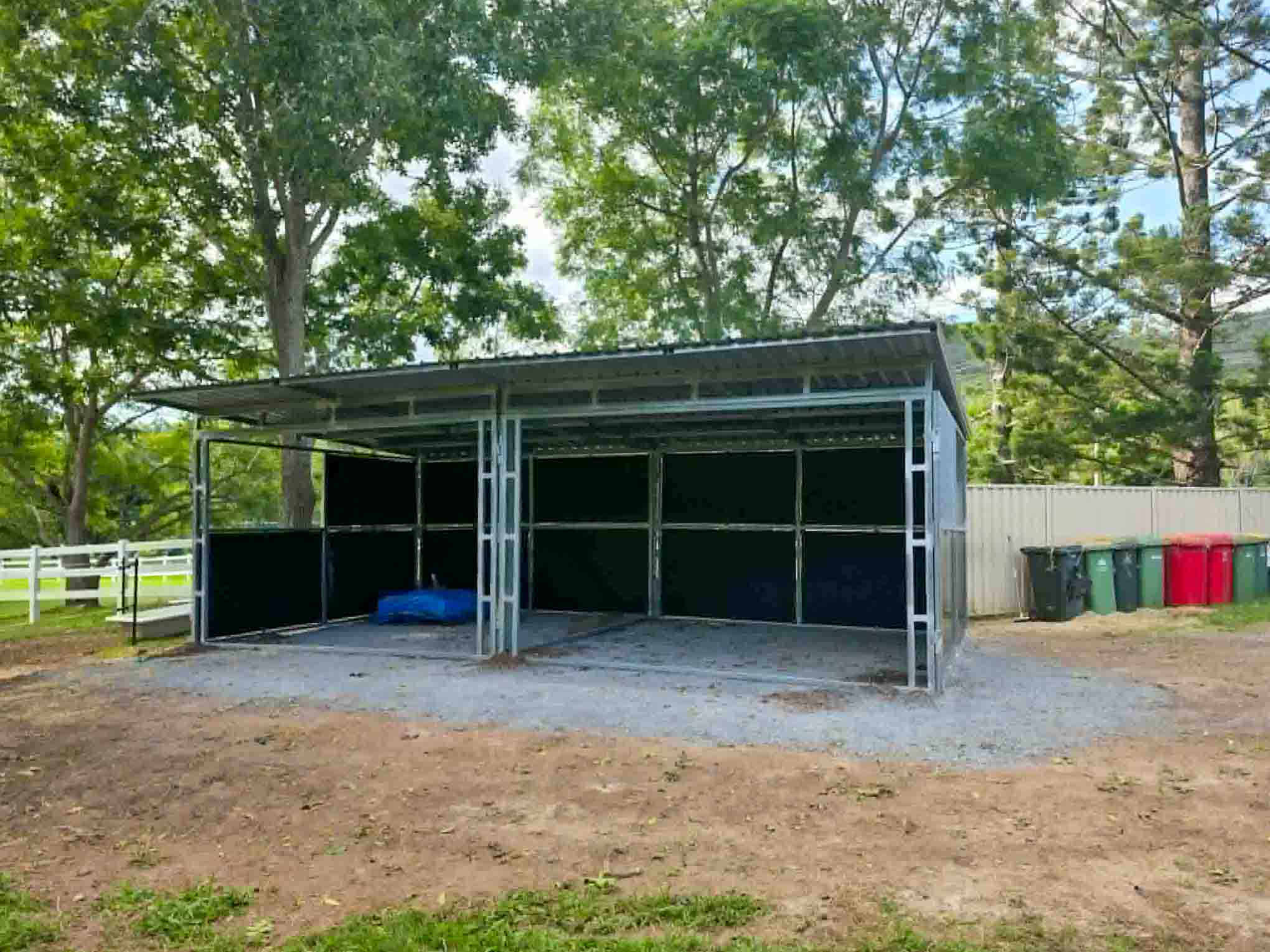 GS-632 / June 2026
✦ Customised
GS-632 / June 2026
✦ Customised
Not if it’s pre-engineered properly for the conditions.
Steel isn’t the deciding factor. Airflow, internal volume, orientation, openings and moisture management are.
Even a badly designed or positioned steel paddock shelter can certainly become extremely hot. So can a poorly ventilated timber stable or converted farm shed.
The difference is in the design.
That’s why we don’t see ventilation as an optional stable extra. For Australian horses, particularly those being stabled through hot Queensland summers, it’s part of getting the structure right in the first place.
If you’re planning a new stable, look beyond the frame and roof. Think about where fresh air will enter, how it will move past your horse and where the accumulated heat will escape.
Already have a shed you’re thinking of converting? The same questions apply before you start installing stable panels.
Built once. Built right with steel frames. And built so the horse can actually breathe comfortably inside it.
If you have any Stable Buying Questions or want something custom, Give Morgan a call on 0405 538 413, email guerillasteel@gmail.com
700 downloads · last download 2 hrs ago
No spam — just expert tips, offers, and updates from your local stable builders. View our Privacy Policy.