No products in the cart.
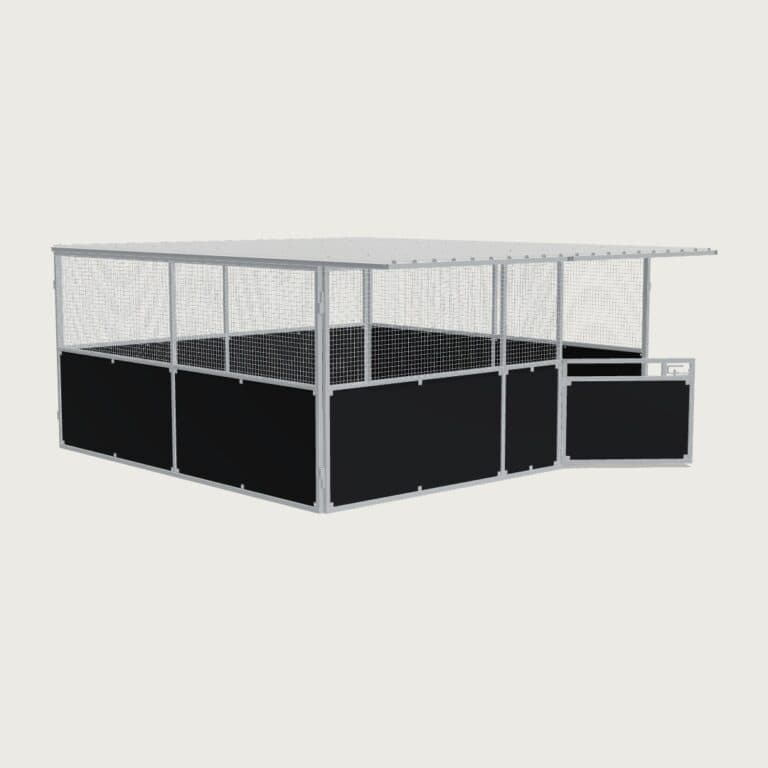
Base Model
XLarge
GS-BASE-XLG-1
XLarge Maternity Stable Kit Single Bay
Orientation
Dimension
STALL Count
$8,250.00

Selecting the right stable for a single horse is about structural facts: proper size, superior airflow, and guaranteed durability. We explain the best choice for your first or only horse.
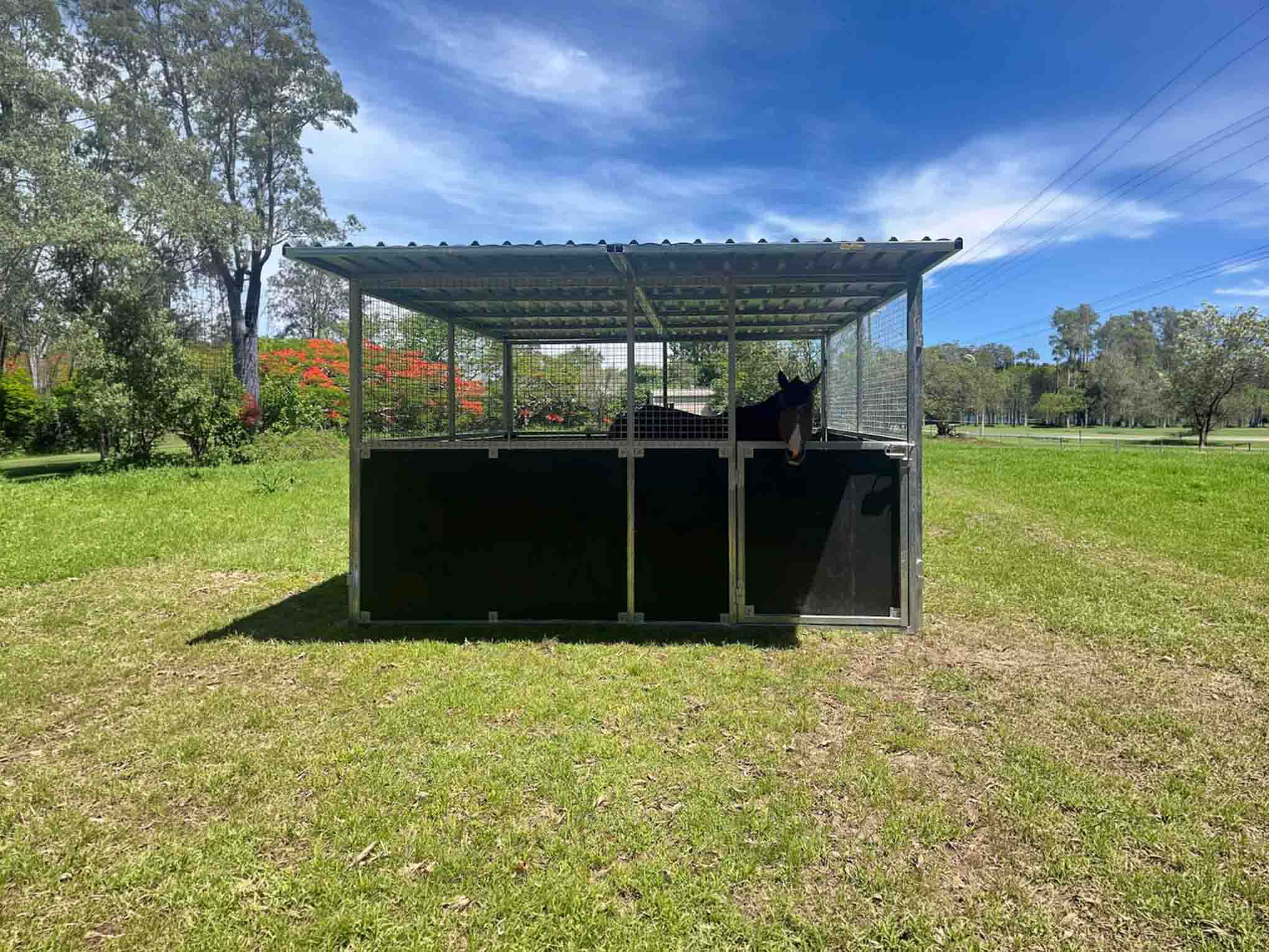
For a single, average riding horse, a 4m × 4m stable is the practical starting point, with 16m² giving enough room to stand, turn, lie down and be handled safely. If the horse lives mostly on pasture, a shelter may be the better fit, and if the horse is larger or a Warmblood or Draft, the size should be increased.
Start with how your horse lives. Then look at size, airflow, construction, site conditions and what the stable will really cost by the time it’s on your property. If your horse needs a fully enclosed stable, a 4m × 4m bay is a practical starting point for many Australian riding horses. If your horse lives outside full-time and mainly needs protection from sun and weather, a simple shelter may make more sense.
And think a little further ahead. You might have a single horse now. That doesn’t mean you’ll only ever need one bay.
Buying your first stable can get complicated surprisingly quickly. You start out looking for somewhere safe and dry for one horse. Before long, you’re comparing stable sizes, steel frames, kickboards, roof designs, council rules and prices that don’t always include the same things.
For single-horse owners, it doesn’t need to be that complicated.
A horse needs enough room to comfortably stand, turn, lie down and get back up without being crowded by walls, gates or fittings. As a useful starting point, around 12m² or more of usable floor area is appropriate for an average-sized horse. A common 3.6m × 3.6m box gives you just under 13m².
For a permanent single-horse stable, we generally prefer 4m × 4m per horse. That gives you 16m² inside the bay. The extra space isn’t excessive, but it makes a noticeable difference when the horse turns, lies down or gets up. There’s also more working room when you’re mucking out, feeding or handling the horse.
A bigger horse may justify moving up again. As a practical guide:
| Stable size | Floor area | Where we’d consider it for the equestrian community. |
|---|---|---|
| 3.6m × 3.6m | 12.96m² | Useful minimum benchmark for an average horse |
| 4m × 4m | 16m² | Our usual starting point for a single horse |
| 4m × 5m | 20m² | Larger horses or owners wanting more working room |
| 5m × 5m | 25m² | XL horses, mare and foal, recovery or specialised use |
Consider the stall design as well. Breed, horse size, temperament, how long they’re stabled and what you’ll be doing inside the bay all matter. For the deeper sizing considerations, see our Horse Stable Size Guide
For most of the single-horse stables we build, 4m × 4m is cost effective and keeps horses safe. It is the sweet spot.
It’s compact enough that you’re not paying for a huge structure you don’t need, while 16m² gives an average riding horse useful room to move and rest.
Our standard 4×4 stable is also 2.4m high and uses a prefabricated panel system. That matters because you’re not locking yourself into one stall for your equine needs forever.
One small horse now? Fine.
If another horse appears in two years (and horse owners will know how easily that happens) another bay can be added rather than starting again.
The important distinction is that 4×4 isn’t a magic number suitable for every horse. A Warmblood, Draft or particularly large horse deserves another look at the dimensions before you order.
Not sure between 4×4, 4×5 and 5×5? Our full sizing guide goes into the differences
This really comes down to how you manage the horse and what will be a practical solution. If your horse lives on pasture and mainly needs somewhere it can voluntarily get out of the sun, wind and rain, a an open shelter may be all you need.
A stable makes more sense when you need secure confinement. For overnight stabling, controlled feeding, closer monitoring, routine handling or somewhere safe to keep a horse when pasture access isn’t appropriate.
Neither option is automatically better for equine needs.It’s about matching the building to the horse and the way your property works.
If you are asking if you even need a stable, check out this guide: Do You Need a Horse Stable? How to Choose Between Pasture, Dry Lot and Paddock Shelter
Look at the materials used and the parts the horse can actually kick, lean on, rub against, chew or get caught on.
For a steel stable, we’d check four areas first:
Our standard stable system start with 50×50mm galvanised RHS steel prefabricacted frames. Solid lower panels and mesh upper sections. Roofing and panel configurations can then be changed depending on the build.
Kickboards deserve more attention than they normally get. We’ve written a separate guide to horse stable panel kickboards We’ll also be publishing separate guides covering stable gates and latches, frame construction and roofing options. Those components deserve proper explanations rather than being squeezed into a shopping list here.
Stable height matters. But a tall box with nowhere for air to move is still a box. Our standard stable height is 2.4m, combined with open mesh upper panels that help maintain visibility and air movement around the horse.
Good stable ventilation is about giving fresh air somewhere to enter and warm, damp or stale air somewhere to go. In Queensland especially, you don’t want to design a stable around keeping every bit of weather out and accidentally keep all the heat and moisture in.
If summer heat is one of your main concerns, we’ve gone much deeper into stable design and ventilation for Queensland conditions.
This is where comparisons online can get messy. One advertised price might be for panels only. Another might include the roof. Installation, delivery, anchoring or upgrades may be separate again.
So don’t just ask, “How much is the stable?” Ask, “What do I actually get for that price?” Before comparing any two stable quotes, check:
A $500 difference on website price list can disappear pretty quickly if one kit still needs major components added before a horse can use it.
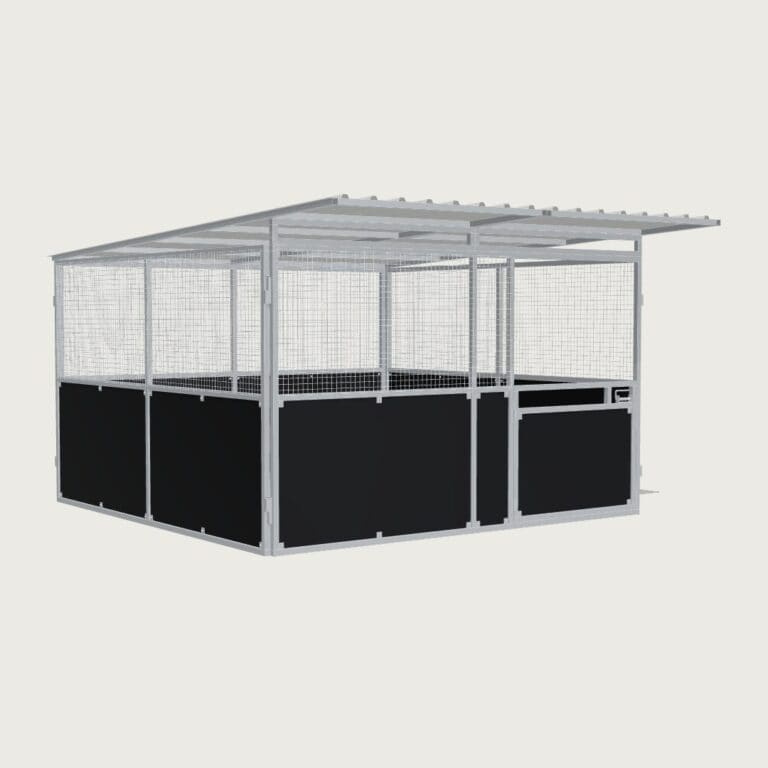
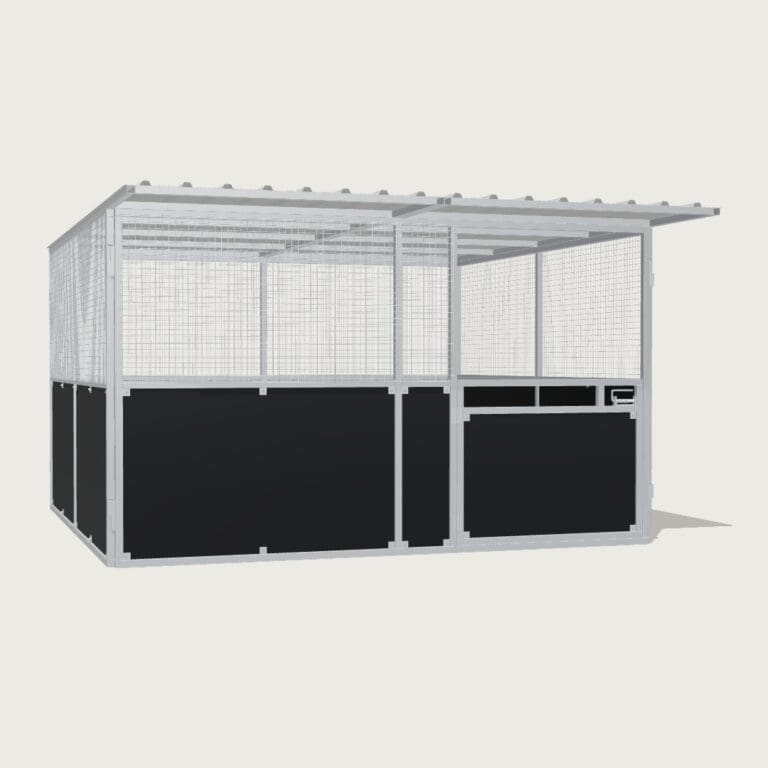
What works best for you will really depends on your boarding model and routine. QLD or NSW climate and your properties location will also have some impact on what might suit you best.
Choose a stable kit if you prefer your horse stabled overnight. Or if you need secure tack storage near by. An enclosed structure gives more coverage in a high-rainfall/humidity zone (like Sunshine Coast, Gold Coast Hinterland or Northern NSW). A shelter kit may work well, if your horse lives mostly on pasture. Its a good low-maintenance housing option, and can be easier to relocate if you’re on leased land.
We have a full guide to help decide If you need a horse stable, shelter or if a well-managed pasture or a dry lot might work best.
| Factor | Full Stable Kit | Shelter Kit (Run-In) |
|---|---|---|
| What you do | Daily stabling, night lock-up, training base | 24/7 pasture with weather protection |
| Climate fit | Better for extreme heat/cold, dust, flies | Good for mild climates, requires good drainage |
| Cost | Higher upfront (foundation, walls, doors) | Lower cost, simpler installation |
| Management | More daily labour (mucking, feeding in stall) | Less daily labour, more pasture management |
| Flexibility | Can convert to tack/feed room later | Fixed function, harder to repurpose |
Yes You don’t necessarily need to buy a two or three-bay stable because you might own another horse one day. You do need to put the first bay in the right place.
Our horse panels are designed so a single bay can become part of a larger run later. The end panel can be removed and another bay connected using the same basic structural system.
That might look like one 4×4 stable → two stables → tack/feed room → wash or tie-up area
Prior to building think about positioning the first stable somewhere that makes sensible expansion difficult.
Think about vehicle access, gates, yard access, drainage and the direction another bay would extend. Leaving a little room now can save a lot of compromise later.
We’ve used the same approach on larger modular builds, including equine facilities. Our Samford Valley four-bay system, for example, uses connected 4×4 bays in a continuous layout designed to allow further additions.
Start with what you need. Just don’t design yourself into a corner.
For a straightforward single bay, DIY can be a sensible way to keep the project cost down. Our current professional installation pricing for a standard stable starts at around $400–$650 per bay, depending on the setup and location. A 4×4 DIY installation typically takes around 8–14 hours, depending on the site, equipment and people helping.
If you’ve got a prepared site, suitable tools and you’re comfortable assembling a steel structure, DIY is worth considering. If access is difficult, the site needs work or you’d rather have the stable ready to use without losing a weekend to it, professional installation can be money well spent.
Our Nerang project is a good example of a single 4×4 stable being owner-installed in a day
See the DIY installation guide
Before delivery, think about where rainwater already travels across the property. You don’t want to discover after the first big storm that you’ve built the horse’s bedroom in the natural drainage line. The site should be stable, reasonably level and prepared so water moves away from the stable rather than through it.
Inside the stable, a slight fall can help manage urine or wash water without creating an uncomfortable slope under the horse. Your flooring choice then depends on the site and how the stable will be used. Also think about delivery access. A beautiful flat stable pad isn’t much use if a truck can’t reasonably reach it.
We’ve covered preparation and installation in more detail in our stable site preparation guide
Possibly. And don’t assume that because it’s “only one stable” it automatically falls outside council or building requirements. Rules vary by state, council, zoning, property, stall size, and structure.
In Queensland, some very small structures may fall within accepted building work provisions under particular conditions. But a standard 4m × 4m stable has a 16m² footprint, so you shouldn’t assume an exemption intended for a smaller structure applies.
NSW requirements also depend on the property, zoning and the applicable development pathway rather than one simple statewide size rule.
Before ordering, check:
We’re developing separate council-planning guides because this is one subject where broad internet advice can cause more trouble than it solves.
Your council or building professional should always confirm the requirements for the actual property.
There’s no single way to set up a stable for one horse. The right build depends on the horse, the property, your budget and whether you want to install it yourself or have the stable fitted on site.
The projects below show some of the different ways we’ve approached single-horse stables across Queensland. We have simple DIY setups and custom-built and professionally installed stables. Have a look at the sizes, layouts and build details to see what might work on your own property.
A fully welded standalone stable showcasing Guerilla Steel’s largest roof span yet, featuring a rear gutter system for rainwater management. Built with Australian RHS galvanised steel, mesh-top panels, and 17mm form ply kickboards, it delivers durable, weather-ready coverage with smart airflow, set on slab-ready compacted ground for future expansion.
See the Guerilla Steel Build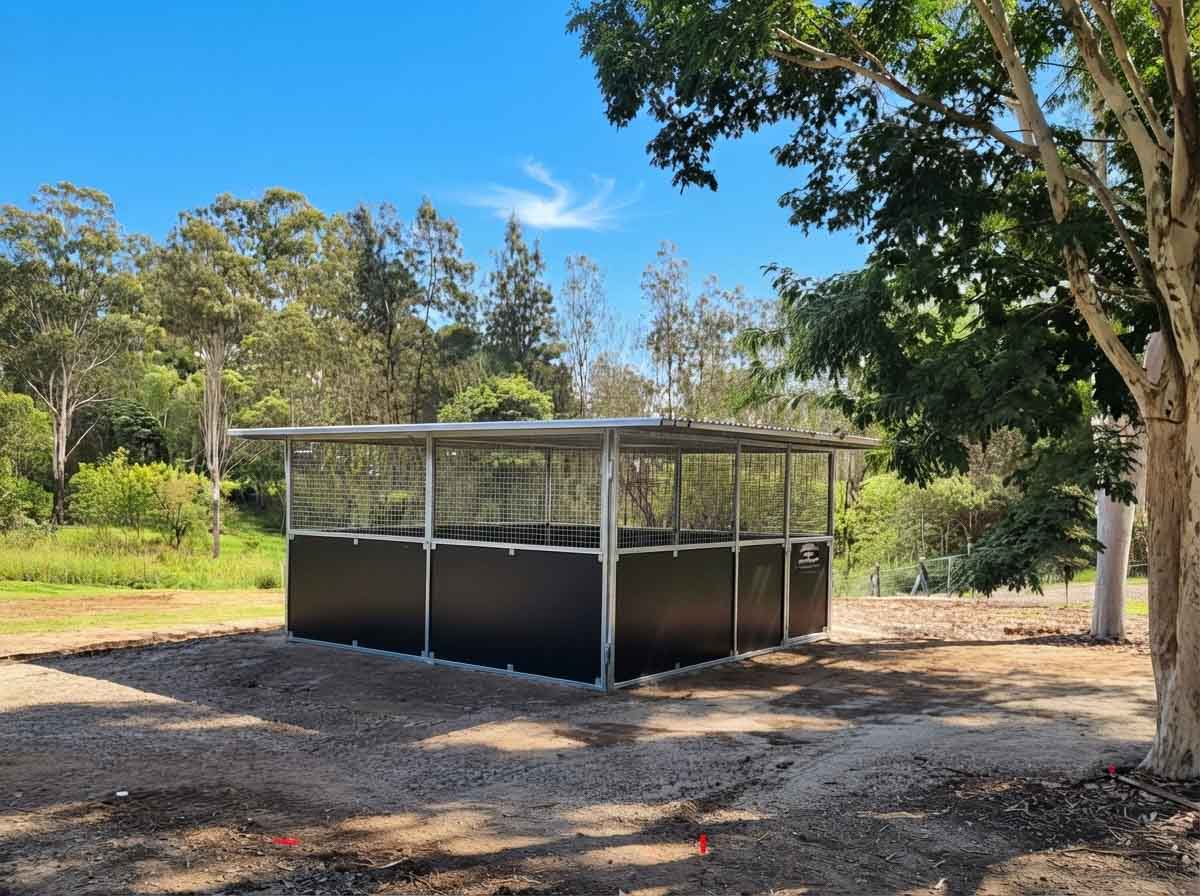 GS-136 / November 2025
✦ Customised
GS-136 / November 2025
✦ Customised
A Samford stable bay project featuring a modular steel design with practical handler-friendly features. Highlights include a front feed hatch for safer feeding, an integrated tie-up rail for grooming and saddling, airflow mesh panels for ventilation, and durable galvanised steel framing offering shade and weather protection for everyday horse care.
See the Guerilla Steel Build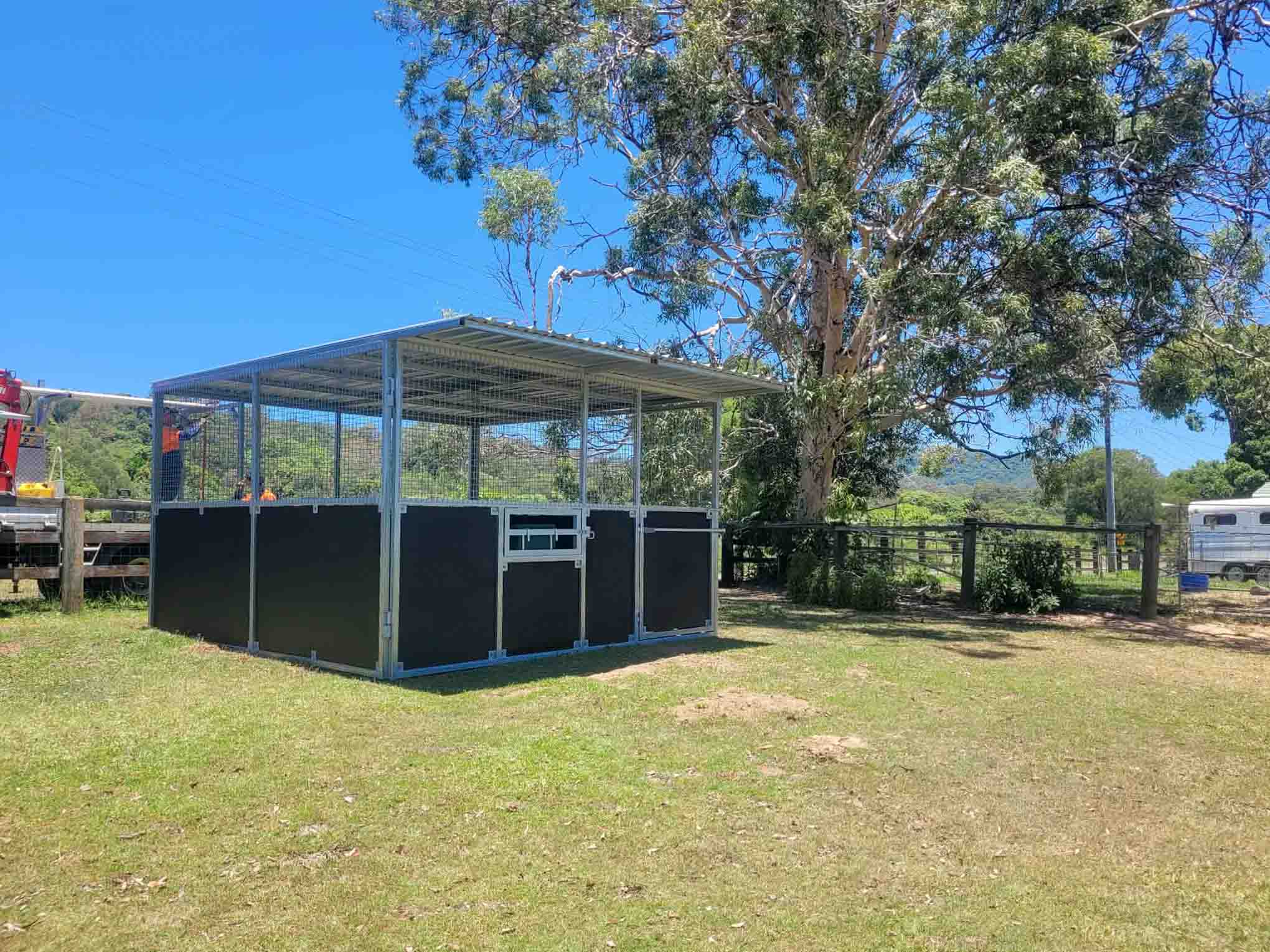 GS-144 / January 2026
✦ Customised
GS-144 / January 2026
✦ Customised
Before you put down a deposit, run through this list.
1. How big is the horse?
Don’t buy from horse numbers alone. One pony and one 17-hand Warmblood aren’t asking the stable to do the same job.
2. Does the horse actually need a stable?
If all you’re solving is shade and weather protection for a pasture-kept horse, look at shelters too.
3. What’s the usable internal size?
Compare actual floor area, not vague labels such as “standard” or “large”.
4. What’s taking the impact?
Check the frame, lower panels, gates, latches and welds. Horses are hard on buildings.
5. How does air move through it?
Don’t rely on roof height alone. Look at the amount and position of open or mesh areas.
6. What’s included in the price?
Roof? Gate? Anchors? Delivery? Installation? Get clear before comparing quotes.
7. Where will the water go?
Look at the property during heavy rain if you can. Water has an annoying habit of finding the mistake in your site plan.
8. DIY or installed?
Decide whether the labour saving is worth your time, equipment and confidence.
9. What happens if horse number two arrives?
Even if you’re buying one bay, think about where a second bay or tack room could go.
10. Have you checked council requirements?
Do this before ordering, not while the stable is sitting on the truck.
It depends on the horse, but also on the property. When we’re planning a stable build from scratch, things like good drainage, natural light and ventilation. Is there safe access between paddock or pasture and the stall. Will it be an easy to clean stall environment all affect how well the stable works day to day.
Then we can decide what other horse areas to consider when building. If its a small horse barn with a wash bay or will you need modular stable you can add on a tack room later?
For a horse living on pasture full-time: we’d first look at a solid stall shelter. If there’s no need for regular confinement, don’t automatically spend more money enclosing the horse.
For an average riding horse that will be stabled: we’d generally start with a 4m × 4m stable. Sixteen square metres gives useful room without unnecessarily increasing the footprint and cost.
For a larger horse: we’d look at the larger stall 4m × 5m before committing to the standard bay.
For a very large horse, mare and foal, recovery or specialised use: that’s when the 5m × 5m starts making more sense.
And for a single-horse now, with a reasonable chance of two later?
We’d still consider starting with one 4×4 bay.
We’d just be much more careful about where we put it.
Position it properly, keep an expansion side available and use a modular system that doesn’t force you to throw away the first investment when your plans change.
If you already have a suitable shed or old barn. You may be able to convert an existing shed rather than building from scratch. A good retrofit can use stable panels to create a safe horse stall. Just make sure the original shed has enough height, structural clearance and usable floor space before planning the stable build.
Buy what you need now. Plan for what might come next.
Not sure whether your horse needs a shelter, 4×4 stable or something larger? Send us the horse size, how you manage them and a little about the site.
If you have any Stable Buying Questions or want something custom, Give Morgan a call on 0405 538 413, email guerillasteel@gmail.com
700 downloads · last download 2 hrs ago
No spam — just expert tips, offers, and updates from your local stable builders. View our Privacy Policy.