No products in the cart.
Built Once. Built Right.
Ask the right questions and get insider know how to avoid uneven ground, poor drainage, and layout issues Find out how to prep your site right
There’s a flood of information out there about equine housing and designing or building stables, but most of it assumes you’ve been around horses for decades or have an unlimited budget. If you’re new to owning a horse, or just stepping into rural life, knowing what to think abut when planning, choosing the right size stable and where or how to set it up are some of the most important decisions you’ll make.
We have put together one of the most comprehensive guides to buying a horse stable on the internet! Covering almost everything you need to know or think about before deciding on your first horse stable.
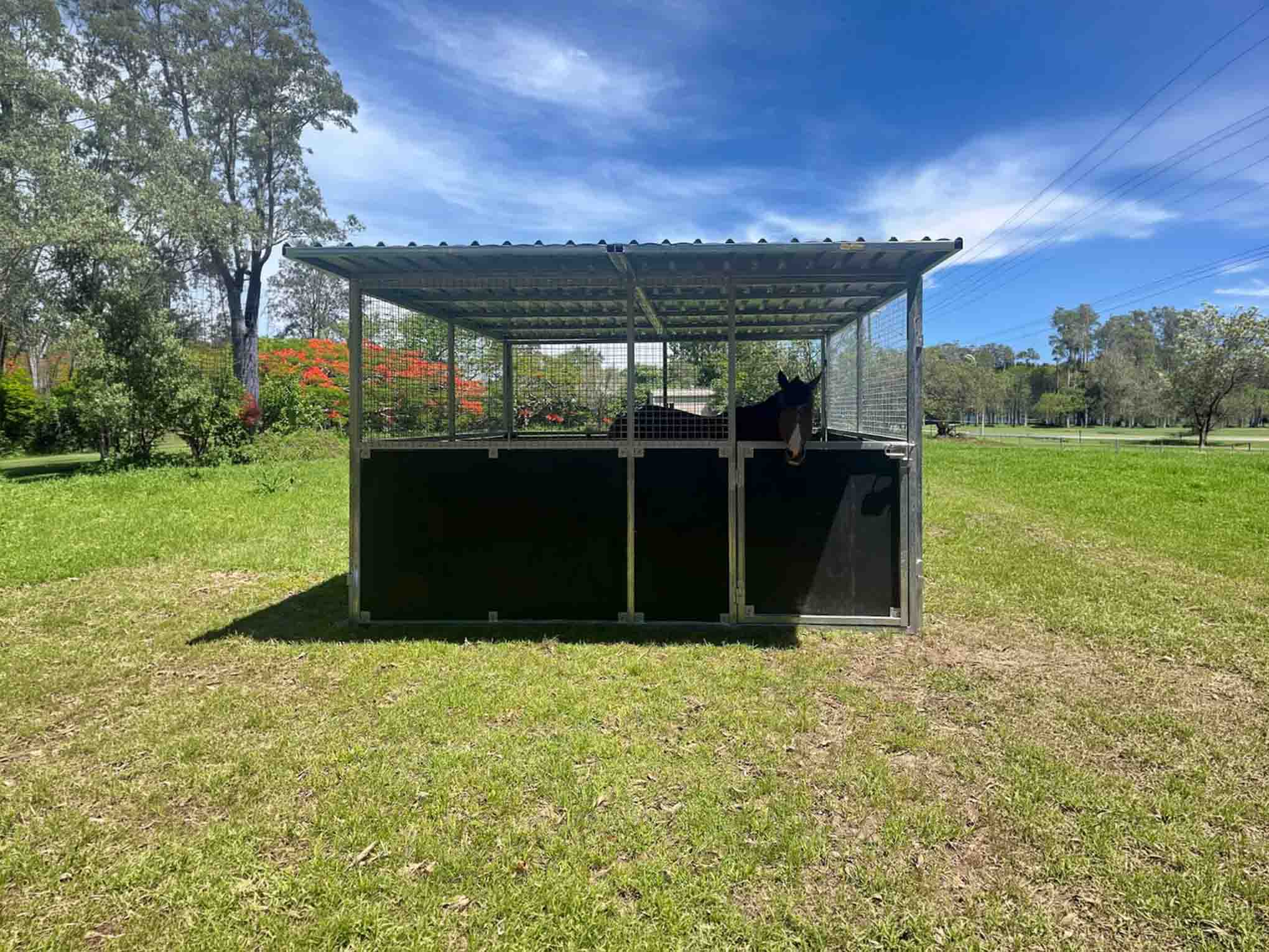
Size matters, but not in the way most people think. Bigger isn’t always better. The right stable gives your horse enough room to move, lie down, and feel safe, without wasting money or materials.
| Standard 4m x 4m Stable | Best for single horses and hobby use. It’s compact but provides ample space for most riding breeds. – Comfortable size for rest and turn-around – Entry-level price point – Easy to expand later |
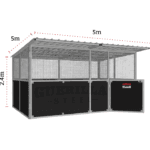
| Large 5m x 4m Stable | Ideal for One chunky horse or two ponies short-term. Great if you’ve got a chunky breed like a Clydie cross or want a bit of gear in the corner. – More room to move – Ideal for gear corner or tack hooks – Great middle-ground size |
| XL/Maternity 5m x 5m Stable | Built for big units. Perfect for foaling, larger breeds, or if you want flexibility down the track. It can also double as partial storage space. – Extra room for vet care or storage – Flexible for future use |
💡 Tip: If you plan to expand your horse family or add extras like a tack room later, go up a size or look at modular stables that can grow with you.
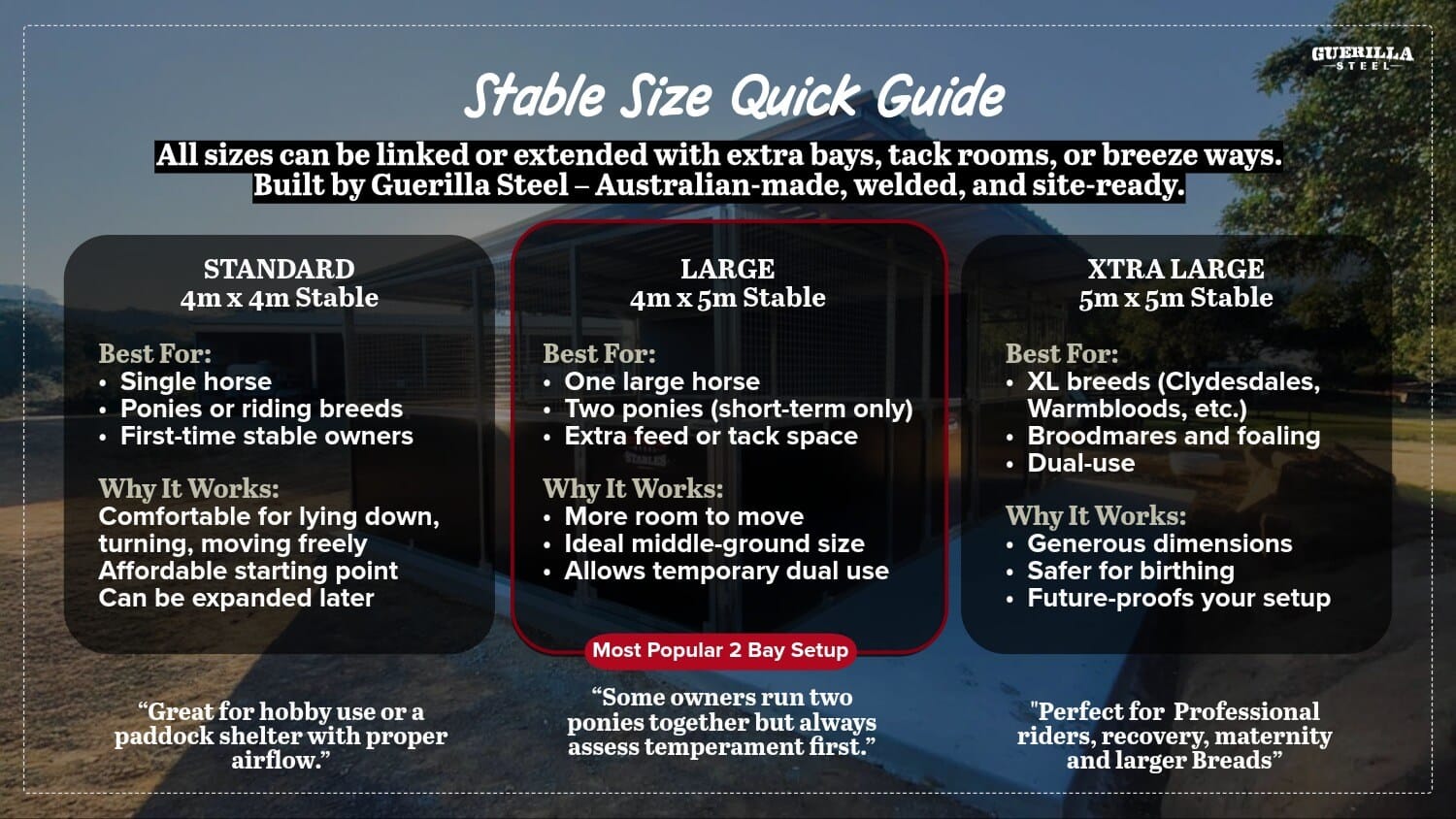
✅ Good to Know: Our 4x4m standalone stable starts at $4500, while the 5x5m setup starts from $7500. All come site-ready with delivery advice included.
Buying your first stable isn’t just a matter of throwing a shed on your paddock and calling it done. It’s about layout, flow, welfare, and long‑term practicality. You need to ask the right questions up front to avoid costly problems later
Your design and placement choices affect your horse’s health, your workload and the value of your investment.
Your stable isn’t just for horses, it’s a hub for everything from feed delivery to emergency vet care. If a float, truck or service ute can’t safely reach your stable in all weather, you’ve got a problem. Plan for:
Tip: If you’re not sure your site allows for this, send us a photo or call for layout advice before you build.
Prevailing winds can either cool your stable or turn it into a wind tunnel. Get it wrong and you’ll be dealing with flapping feed bins, wet bedding, or a spooked horse every time the southerly picks up.
Done right, this creates a, breathable stable, without compromising shelter.
Think ahead. Even if you’re only housing one horse today, most first-time buyers end up wanting:
So while one 4x4m bay might be enough now, don’t box yourself in. Leave space between your stable and trees, fences or sheds. Even though our stables can be moved, You’ll thank yourself when it’s time to expand.
Where you place your stable matters more than most first-time owners realise. A low, boggy site becomes a health hazard fast, especially in Queensland storms. Even without a slab, building on a slight rise or well-drained slope helps water run off and keeps the structure stable.
Your site should slope 1, 2% away from the stable. Use compacted gravel edges or low retaining to keep runoff moving. If your paddock tends to get wet, raised gravel pads or compacted road base over a shaped slope are your best bet. Not only does it protect hooves and flooring, but it reduces ongoing maintenance. Never let water flow into your stable.
We’ve built hundreds of stables on all sorts of foundations, and most owners don’t need a slab. What you do need is good drainage, proper prep, and the right base for your site conditions.
You don’t always need concrete, but you do need to plan properly.
Check out our Stable Site Prep Guide with downloadable resources to guide you through pre-quote planning and build design decisions – or contact Guerilla Steel team to get help before you order.
Concrete works great in high-traffic areas or wash bays. But for most stable builds, a compacted road base is more affordable, easier to install, and offers plenty of support. It also drains better in many rural conditions, especially on sloped or sandy sites. The key is choosing the right foundation for your ground type, budget, and stable use. Here’s a high-level breakdown:
| Foundation Option | Pros | Cons | How to Make It Work |
|---|---|---|---|
| Concrete slab | Durable, easy to clean, best for wash bays | Expensive, can sweat under mats, harder to alter later | Use with slope and drainage, seal edges, and add mats for comfort |
| Compacted gravel pad | Affordable, drains well, easier for DIY | Needs proper edging and compaction | Use road base with fines, slope slightly for runoff |
| Grass base | Cheapest option, natural look | Bog-prone, can become uneven or muddy | Only use on firm, level, well-drained ground |
| Existing concrete slab | Fastest option if already available | Must be structurally sound and flat | Send photos, we can assess if it’s suitable |
Plan services and trenches early, so you don’t have to cut through your base down the track. Mark out service lines as part of your planning. Before you lock in your foundation, think about:
So now we have the foundation and our stable wont sink into the mud, we need to anchor – No, not for the boat, we mean for your stable! While anchors are optional, if you’re building on grass or gravel, we strongly recommend them. They prevent movement in high winds and protect your investment. It’s a cheap insurance policy. One bad storm or windy day can move or tip an unanchored structure. Our anchoring kits:
Before building a stable in Queensland or northern NSW, it’s essential to check local regulations to avoid compliance headaches. Rules vary by council, but here are the key points:
If your property is near waterways, creeks, or environmentally sensitive zones, expect to show:
Large or commercial setups may also need other control measures and Emergency and disease management plans.
Airflow isn’t just a comfort issue, it’s a horse health and hygiene one. Horses need fresh air to stay in top shape. Poor ventilation leads to ammonia build-up, heat stress, and respiratory problems. Our stables solve this with Ventilation and Airflow design choices:
Horses see well in daylight, but poor lighting makes them uneasy, especially in confined spaces. It also impacts your workflow when feeding, mucking out, or checking injuries. Here’s how we get it right:
Natural light makes a stable safer, calmer, and easier to work in. If you need extra lighting, we can pre-plan for wiring and LED installs.
Your stable has to stand up to real Aussie conditions, not just the good days. Think wind, sideways rain, flash storms, and the occasional freak gust.
Our stables are designed for fewer drips, drier bedding, and no muddy entrances. Every Guerilla Steel stable comes with:
Choose panels that hield Wind Without Trapping
We’ve already covered how panel combinations affect wind, rain and airflow, but the right mix also helps with workflow, privacy, and horse wellbeing. Guerilla Steel stables are modular, and you can choose the layout and panel types that suit your horses and your block. You choose any combination and place them strategically:
| Combination | Best For | Pros | Cons |
| Full Mesh Panel top to bottom | Maximum visibility & airflow | Light, breathable, good for calm horses | Offers little wind or privacy block |
| Full Ply Panel privacy and wind protection | High wind areas, privacy needs | Strong, blocks rain and wind, helps with anxious horses | Blocks air and light |
| Half Mesh / Half Ply most popular choice | Balanced option for most sites | Airflow up top, kick protection below, versatile | Slightly less private |
| Extra Gate Panel | Flexible access, vet or float setups | Dual entry, flow management | Adds minor cost |
| Full Ply Internal Divider | Rehab or anxious horses | Solid barrier, reduces visual stress and kicking risks | Reduces airflow between stalls |
Your stable’s gates will be one of the most used, most critical parts of your setup. They need to be safe, strong, and functional. That’s why every Guerilla Steel base model includes a half-height swing gate as standard. No flimsy latches. No expensive add-ons just to get started.
| Gate Type | Best For | Benefits |
|---|---|---|
| Half-Height Swing Gate | Everyday use, first-time builds | Included standard, simple and strong, great for general use |
| Yoke Gate | Sociable horses, reducing stall stress | Taller Gates, lets horses see out safely, practical design touch |
| Dutch-Style Doors | Extra airflow, social horses | Top half opens independently for ventilation and visibility |
| Anti-Rearing Sliders | High-stress stables, stallions, rehab | Prevents escape or injury, smooth sliding action |
| Full-Height Barn Doors | Maximum coverage with ventilation | Made with mesh and ply combo for strength + airflow |
| Dual Gate Access | Flexible layout, vet access, grooming | Add entry points on multiple sides for safer handling |
If you want something different? We’ve got you covered. We design for studs, trainers, and first-time hobby farms alike. Just let us know how you work, we’ll build the gate to match. All our gates are:
The right stable roof doesn’t just keep the rain out, it protects your horses, supports ventilation, reduces mud, and keeps your entire setup running smoother. Every Guerrilla Steel stable comes with a smart, durable roofing system, and optional upgrades that make a big difference in tough Aussie conditions. All upgrades are modular and cleanly integrated.
| Option | What It Does | Best For |
|---|---|---|
| Up to 2 m Rear Overhang | Adds extra shade and rain protection to the rear | Wet paddocks, exposed rear entries |
| Front Roof Pitch Frame | Increases slope for better water runoff | Heavy rain zones, water catchment setups |
| Side Roof Extension | Creates covered areas for tie-ups, walkways, gear | Yards, grooming, tack access |
Roofing is half the equation, drainage is the rest. Bad runoff causes mud, hoof issues, and long-term damage to stables and gear. Gutters and run off control like the the 100mm rear overhang help:
Place downpipes away from high-traffic zones like gates and tie-ups, and direct runoff to paddock drains, gravel swales, or water tanks to keep your site clean, dry, and horse-safe.
Even the toughest steel stables need smart care to stay in top form.
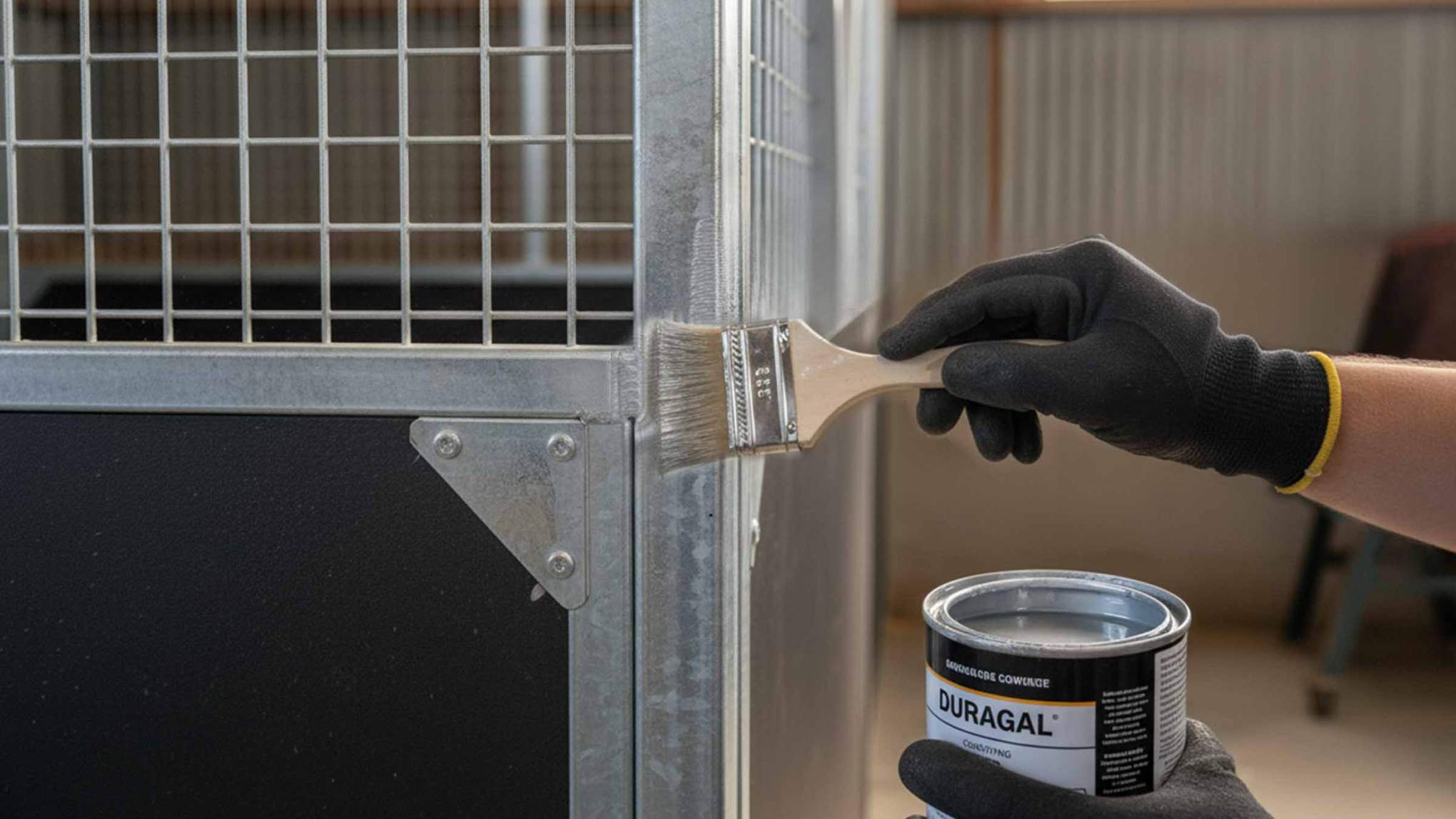
Think of your stable like a working vehicle: routine checks and simple upkeep keep it safe, secure, and cost-effective long-term. Regular checks on coatings, drainage, and fittings keep your panels performing for decades, and your horses safe. For detailed inspection steps, seasonal maintenance, and rodent-proofing techniques, see our full guide: Stable Maintenance for Steel Horse Barns ›
Adding during the main build is cleaner, quicker, and cheaper. Drainage and layout align perfectly, and your daily gear workflow improves. Start with what you need now, but plan for future expansion. Add bays, tack rooms, or wash bays as your horse family or gear grows.
Starting with one horse? You might think one stall is enough. But we’ve seen time and time again, buyers get a second horse or want a foaling space. Modular stables are a smart move. You can start with a single bay and add another later.
| Item | What it is | You need this when… |
| Rails & Fencing | Sturdy steel rails or fences for creating secure yards, walkways, or boundaries. | You want safe horse movement or clear boundaries between yards and paddocks. |
| Tack Rooms | A secure, enclosed space to store saddles, bridles, tools, and gear. | You’re accumulating expensive gear and want it organised and protected. |
| Feed Rooms | A storage area for bulk feed, supplements, and grain, often with vermin-resistant features. | You buy feed in bulk or need safe, weatherproof feed access near your stable. |
| Wash Bays | An area with water drainage for hosing down horses after work or during hot weather. | You groom, cool down, or bathe horses regularly—especially in hot or muddy conditions. |
| Breeze Ways | A covered walkway between bays that improves airflow and provides shaded access. | You’re planning a central aisle layout or want shade and weather protection between modules. |
| Day Yards | Small turnout areas adjacent to the stable for short-term exercise or isolation. | You need to give horses yard time without full paddock turnout, or when recovering or isolating. |
Our flat-pack stable kits are designed for horse owners and easy DIY build. With welded frame panels, no on-site cut or welding is requires. Our clear instructions and phone support means most builds take just a day with two people and basic tools.
You’ve got three clear installation paths. Each works, just depends on your time, budget, and comfort level.
| Option | Best For | Pros | Cons |
| DIY Build | Budget-conscious owners with basic tools and time | Lowest cost, full control, fast build, expandable | Needs time and basic DIY confidence |
| GS Install Team | Buyers wanting a turnkey solution in service areas | Professional install, no physical effort, safe and correct setup | Higher cost, may have wait time, zone limited |
| Hire Local Builder | Buyers outside GS service zones who want pro help | Local knowledge, flexible timing, support available | Quality varies by builder, may need coordination |
Ours are different. We fully weld all panels in our workshop, so when you order a flatpack from us, you’re getting heavy-duty, reinforced panels that are ready to bolt together on-site no guesswork, no flimsy framing, no cutting corners. You can choose to:
Either way, it’s a proper steel stable, not a shed with horse signage slapped on it.
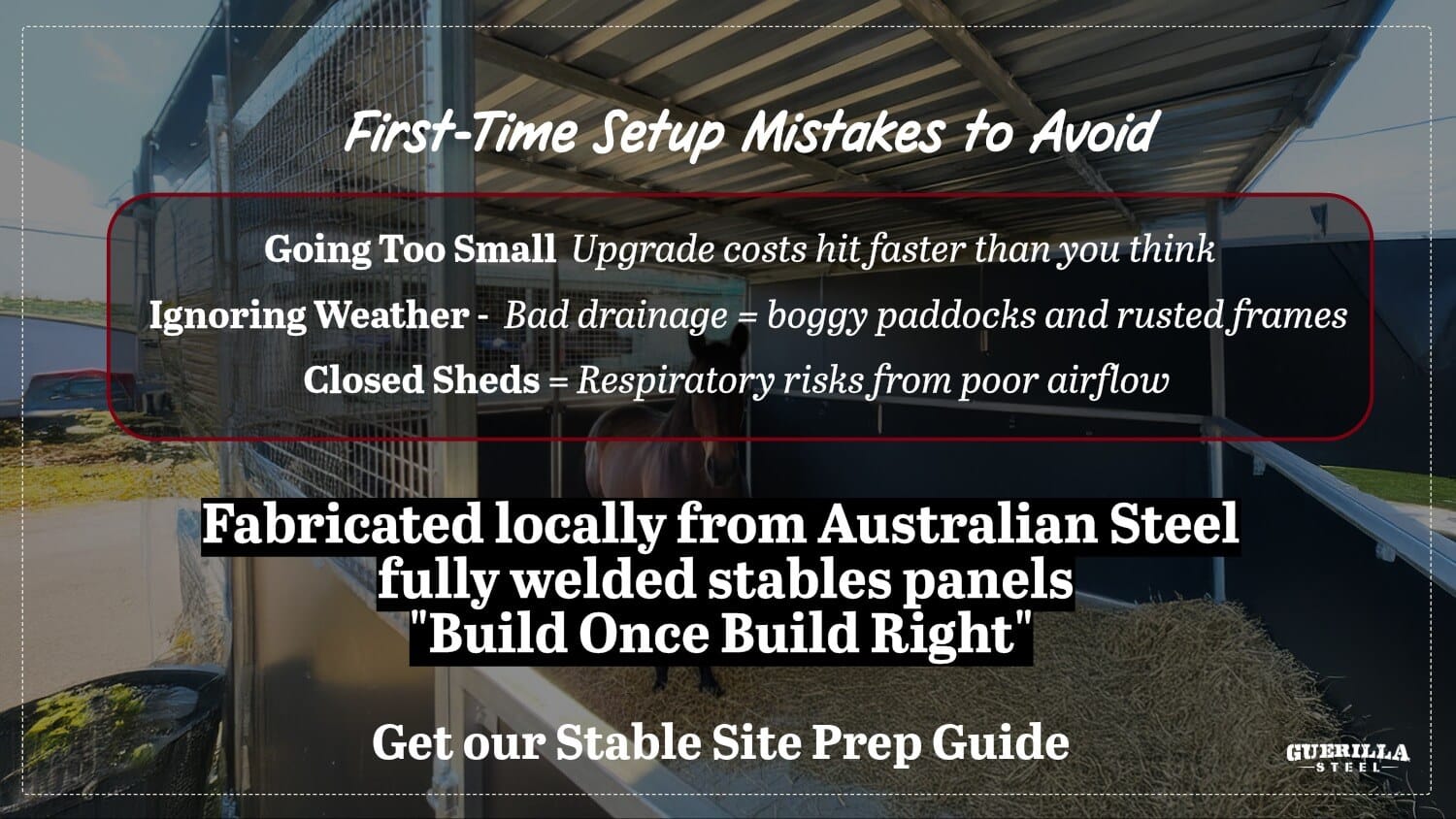
This client came to us after bad experiences with other stable companies, needing a structure that could survive extreme weather. Their property sits on an exposed highland block, regularly hit by strong winds, snow, and horizontal rain.
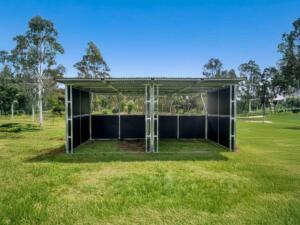
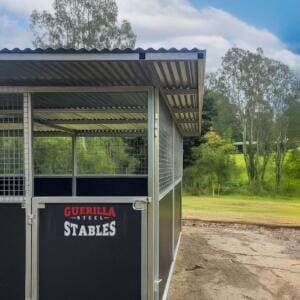
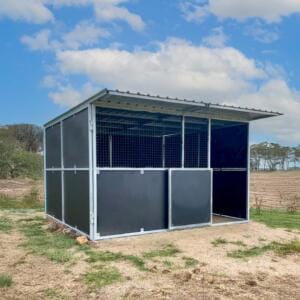
We delivered a heavy-duty flatpack 5x4m steel stable kit, reinforced for these conditions. The walls combined tough ply kick panels with black-painted mesh for visibility and airflow. Every component -bolts, screws, brackets, was supplied and clearly labelled. The kit even included black steel touch-up paint, so they could customise and weatherproof panels on site.
Despite the robust design, the stable was easy to install. With step-by-step instructions and support just a phone call away, the couple built it themselves over a weekend. They even used the extra paint to colour-match the mesh panels to the rest of their setup – a smart, stylish bonus.
The result? A solid, secure shelter that’s weathered storms and frost with ease. The couple was so happy with the experience, they’re already planning their next project with us.
We build bigger and taller than most, and there’s a reason. Aussie weather is brutal, and horses need airflow. All our stables come with a 2.4m roof height and a 900mm roof overhang for extra protection from rain, sun, and sideways storms. Plus, we include a 100mm rear overhang for water runoff.
Compare that to some off-the-shelf sheds with 2m walls and no shelter, it’s a no-brainer. Our kick panels are built tough and made to last. We also include a straight, half-height swing gate as standard in every base model. It’s simple, sturdy, and gets you started without needing upgrades straight away.
Because everything we build is modular, you don’t need to spend big all at once, but you do get a stable that’s future-ready from day one. We’ll give you honest advice and make sure you’re not wasting money or time. Whether you’re after one stall or planning a full setup, we’ve got options that work with your site, budget, and plans.
Contact us today to start planning a stable that keeps your horses safe and calm and saves money where it counts.
Build smart, Build Bigger and Build Stronger with Guerilla Steel
Not sure about where to start planning your stable? This guide walks you through bay sizes, layout, planning, and all the must-have features, whether you’re housing one horse or growing a herd.
All stable pricing, and estimates mentioned in this article are current at time of publishing, for accurate quote please get in touch or visit Base Model Compare page for instant estimate
© 2026 Guerilla Steel. ABN 25 713 977 300. All rights reserved.
Answer 6 quick questions for a personalised recommendation
This helps us understand your project type
How many horses will this stable accommodate?
This helps us recommend the right stable size
This affects anchoring recommendations
We'll suggest the right upgrades for your conditions
This helps with layout recommendations
Calculating your perfect match…
Something went wrong. Please try again,
or get in touch with us if the problem continues