
Steel Horse Stable Maintenance, A Practical Guide for Long-Term Strength and Safety
Steel stables are low-maintenance, but they’re not maintenance-free. This guide walks owners through daily care, rust prevention, drainage fixes, and DIY diagnostics using simple tools. Learn how to extend your stable’s lifespan, prevent corrosion, and keep horses safe year-round with Guerilla Steel’s proven maintenance system.
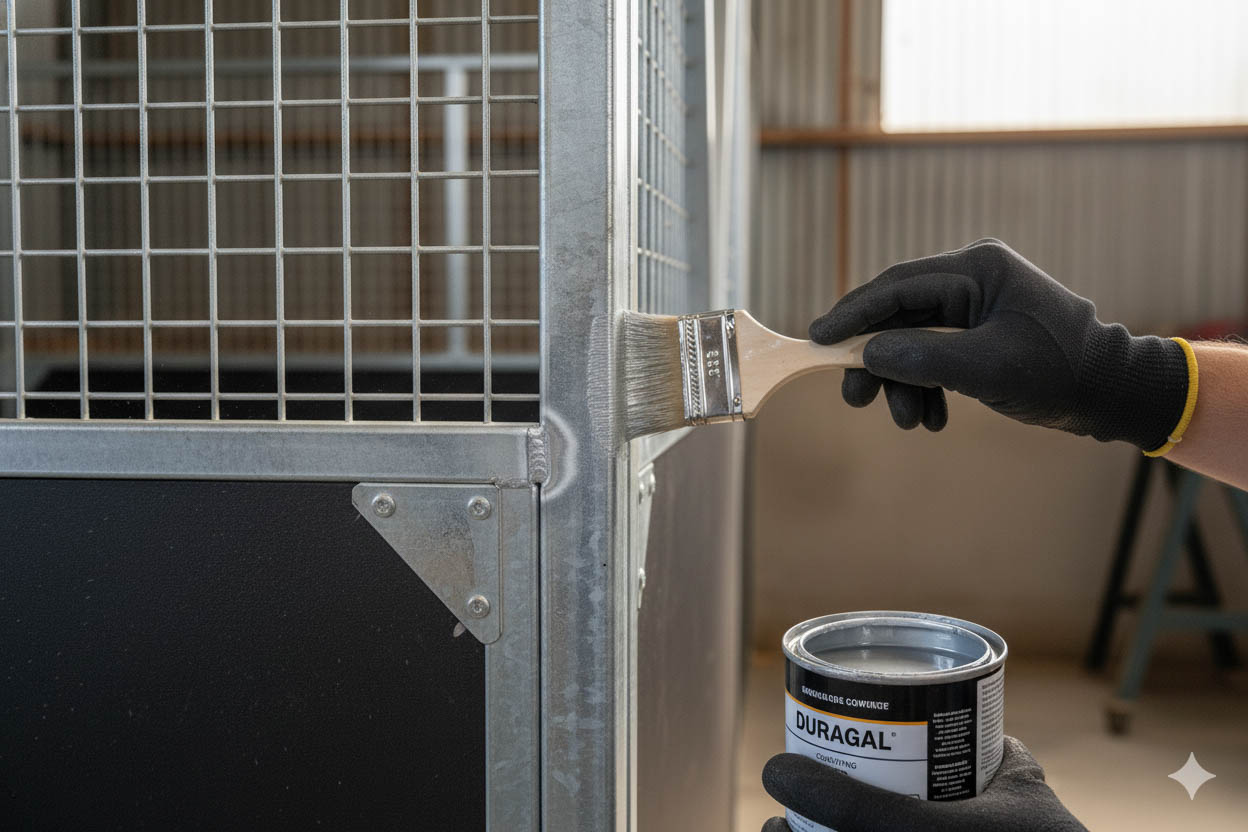
Practical care, real longevity, and smarter ownership.
A good stable isn’t just built; it’s looked after. Steel might be the strongest choice in modern equestrian design, but like any working asset, it rewards the owners who maintain it.
Think of your stable like a work vehicle: regular checks, small adjustments, and the occasional service keep it safe and performing for decades.
Fabricated framework wins because it’s non-combustible, termite-proof, and built for repair, not replacement. And with modular design, replacing a damaged bay or panel doesn’t mean pulling down an entire wall. Each piece can be unbolted, lifted, and rebuilt; that’s the kind of practical flexibility that makes sense in the real world.
The Master Horse Stable Maintenance Checklist
Simple routines prevent expensive fixes later. Here’s a guide that keeps your stable, horses, and investment safe, organised by how often to do each task.
| Frequency | Tasks | Purpose |
|---|---|---|
| Daily (15, 30 mins) | Clean stalls. Check feed and water fixtures for sharp edges. Quick walk-around for gate latches and tie points. | Prevent corrosion and injury. |
| Weekly (1, 2 hrs) | Tighten hardware, lubricate hinges, clear ventilation mesh, and check feed storage for scavengers. | Stop vibration wear and rodent ingress. |
| Monthly (2, 4 hrs) | Power wash the exterior, inspect runoff and slab edges, and run a safety audit for hoof traps or sharp joints. | Keep the structure clean and sound. |
| Quarterly / Annually | Structural inspection, galvanic protection touch-ups, extinguisher servicing, and electrical GFI testing. | Maintain long-term safety compliance. |
| After Storms / Seasonal | Inspect bracing, roof fixings, and structural lines for movement. Check water ingress under purlins. | Catch damage early before it spreads. |
Pro Tip: 90% of stable failures start with loose bolts or poor airflow. Small checks save big rebuilds.
Cleaning and Maintenance Tasks
Clean steel is strong steel, and it’s safer for your horses. Cleaning your stable isn’t just about presentation, it’s preventative maintenance for both the building and the horses that depend on it. Keeping it clean helps you spot general wear and tear.
Every layer of dampness, dirt and debris or manure that builds up inside a stable doesn’t just smell bad; it quietly eats into coatings, welds, and base plates. A consistent cleaning routine protects both your structure and the animals living inside it.
- Manage Air toxins: Urine and manure gases rise and settle on structural frames and surfaces. Over time, they break down zinc coatings and paint.
- Air quality: Dust, cobwebs, and dander restrict ventilation, leading to equine respiratory issues and faster internal corrosion.
- Limit Moisture: Wet bedding, clogged drains, or droplets can cause pitting and rust patches in corners and along posts.
Cleaning Tips for Stalls, Tack Rooms and Steel Animal Shelters
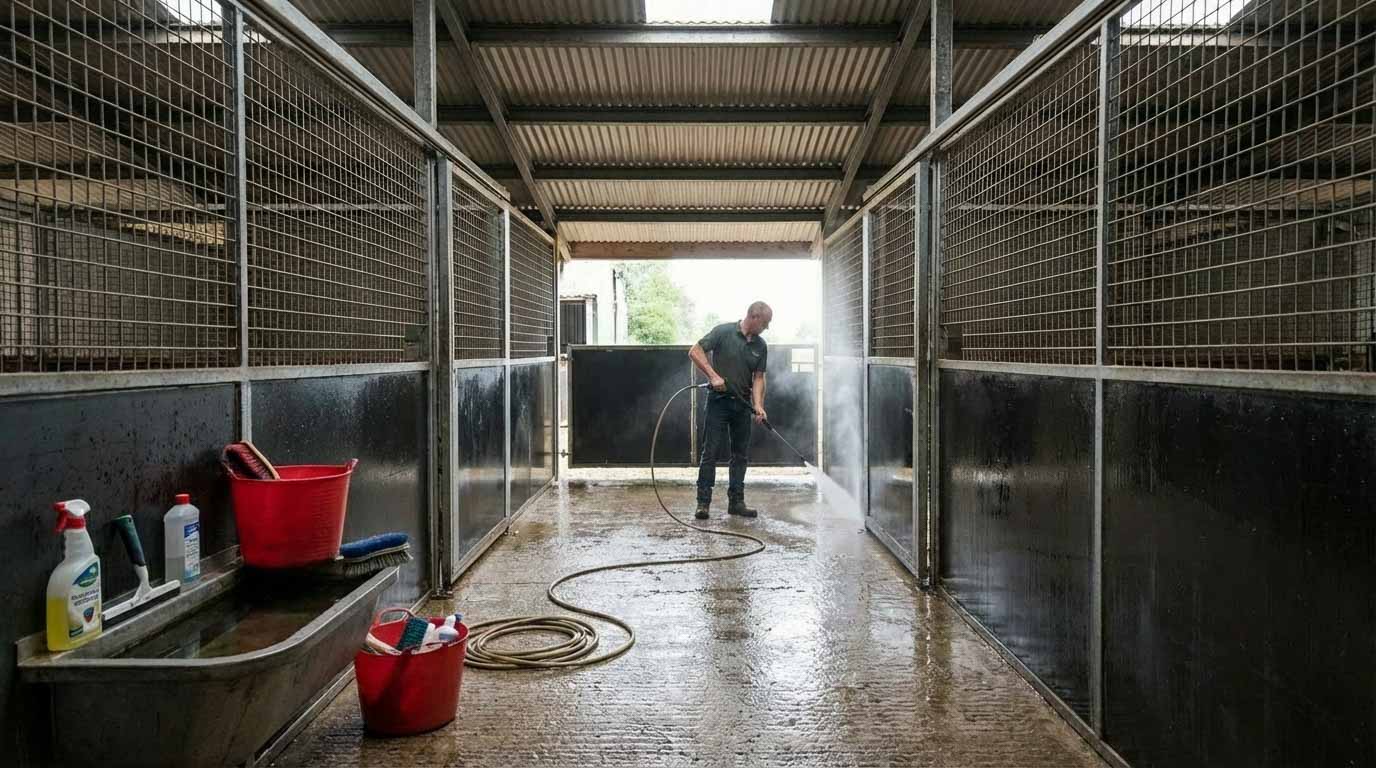
- Use gentle pressure: High PSI washers can strip protective coatings. Use wide fan nozzles and keep 30 to 50 cm away from surfaces.
- Avoid chlorine or acid cleaners: They react with zinc coatings and accelerate corrosion. Use pH-neutral detergents instead.
- Dry after washing: Open doors and windows to allow full airflow, residual dampness causes more harm than dirt.
- Check edges and joints: Water often sits behind kickboards, base plates, and bolt heads, dry or seal these areas after cleaning.
- Routine touch-ups: If paint flakes or dulls, recoat small areas with ColdGal® + DuraGal® silver. It’s easier to protect than to fix.
Creating a Healthy Environment for your horses
Keep your steelwork clean. Horses breathe close to the ground, where odour levels, dust, and manure build up fast. Regular cleaning prevents pest infestations, removes unpleasant odours, and keeps your horses healthy in a safer, fresher environment. By keeping your stable clean, ventilated, and dry, you:
- Reduce respiratory diseases, allergies, and hoof infections.
- Keep feed and water free from contamination.
- Maintain a calm, low-odor environment that reduces stress
DIY Structural Diagnostics: Horse Stall Inspections
You don’t need an engineer to spot early issues, just a few simple tools. (see the Stable “First-Aid Tool Kit below)
String-Line Method for Roof or Wall Deflection
- Stretch a string or builder’s line between two fixed corners of your stable.
- Measure the gap between the line and mid-span using a tape measure.
- If the deflection exceeds 10 mm per 3 m span, it’s time to call a professional.
Foundation Settlement Check
Lay a spirit level across stall thresholds or door frames.
If the bubble moves more than half a division, you’ve got slab movement.
Cost Guide (2026 AUD)
| Restoration Type | Range | Best For |
|---|---|---|
| Crack Sealing | $250, $3,500 | Minor fissures |
| Slab Jacking | $3,000, $15,000 | Uneven dips |
| Underpinning | $12,000, $50,000 | Column shifting |
Rust, Coating & Condensation Control
The anti-corrosion coating helps protects itself, but it still needs your help. Gaseous waste residue from urine and water from the roof both attack coatings.
Top & Bottom Threats:
- Ground-Up: Urine and trapped bedding corrode base plates.
- Top-Down: damp and drips from purlins cause “roof rust lines.
Prevention:
- Raise base plates 150 and 300 mm above the slab.
- Keep ridge vents clear and install insulation blankets under metal roofs.
- After humid days, open doors for natural drying airflow.
Rust Removal & Recoat
- Wash, dry, and sand oxidation with 80 and 120 grit paper.
- Neutralise with vinegar or rust converter.
- Prime with ColdGal, then finish with DuraGal® silver.
A light touch-up now prevents a full resheet later.
Doors, Kickboards & Moving Hardware
These are the parts horses test first and hardest.
- Sliding Doors: Realign by tightening tracks and using shims under brackets.
- Hinged Doors: Lubricate pins monthly with graphite spray.
- Kickboards: Replace 17 mm F17 formply once split or chewed. Seal edges and cap with trim.
- Tie-Up Rails / Anti-Rear Bars: Check welded joins quarterly; look for bending or chipped coatings.
Flooring, Drainage & Moisture Maintenance
If you see puddles lasting over 24 hours after rain, fix the grading before the next storm. Pooling water can cause issues and shorten slab and structure life.
DIY Stable Drainage Fixes:
- Clear built-up bedding or clay blocking flow channels.
- Add crushed rock to regrade low areas.
- Check downpipes discharge away from posts, not towards them.
Environmental Management: Ventilation, Vermin & Ammonia
Good airflow isn’t just for the horse’s lungs; it protects your steel too.
High ammonia levels corrode base plates faster than coastal salt air.
What to look out for:
- Maintain 4 to 8 air changes per hour (ACH)
- Keep your vents, mesh, and ridges clean.
- Use air quality friendly bedding like hemp or wood pellets.
- Hose base plates weekly in high-use stalls.
(Let’s say you have a stable that’s 4 m wide × 4 m long × 3 m high → That’s 48 cubic metres of air. If your ventilation gives you 4 ACH, that means: Every hour, 192 cubic metres of air (4 × 48) is replaced, all the air in the stable refreshed four times.
If your horses don’t cough, the walls stay dry, and there’s no smell, you’re likely within that 4 to 8 ACH sweet spot, even without instruments.
Pest Control, Seal, Store, Stay Clean
Steel can’t be chewed, but ply and feed still invite guests.
Use these habits to keep unwanted guests out and calm horses down.
What to Do:
- Seal the Gaps: Fill joints with mesh or sealant; mice only need 6 mm to enter.
- Cap the Ply: Cover 17 mm ply edges with trim.
- Secure Feed: Keep grain in sealed bins, not bags against walls.
- Cut Back Cover: Trim grass around the perimeter; no cover, no Critter highways.
- Trap Smart: Use tamper-proof baits or traps near corners and feed zones.
- Inspect Regularly: Look for droppings, nests, or gnaw marks.
Horses sense pests before you do. A rustle behind a wall can cause panic and damage.
Troubleshooting Guide: Spot Problems Before They Grow
Most shelter issues start small: a hairline crack, a faint dip, a slight squeak.
Catch them early, and they’ll cost minutes, not money.
Here’s how to tell what’s normal wear and what’s the start of a bigger problem.
| Symptom | Likely Cause | Early Warning | Severity | DIY Action | Call a Pro |
|---|---|---|---|---|---|
| Door sticks or drags | Slab movement / hinge sag | The bottom edge scrapes the floor; the gap on one side of the door frame widens; the latch no longer lines up. | ⚠️ Low – Medium | Tighten bolts, shim hinge, level latch. | If the door frame shifts >5 mm or the track bends. |
| Rusting at base plates or corners | Animal waste splash, trapped bedding, poor water flow | Dull orange haze at welds, white powder (“zinc bloom), flaking coating. | ⚠️ Medium | Clean, neutralise and recoat with a zinc-alloy coating system. | If pits are >1 mm deep or bubbles spread under paint. |
| Roof or beam deflection | Overload / foundation shift | Purlins start to bow slightly; the ceiling line “waves when viewed side-on; doors stop closing smoothly. | ⚠️ High | Use the string-line test; clear debris, and tighten fixings. | If the dip exceeds 10 mm per 3 m span or roof joints separate. |
| Hairline paint cracks seam finish | Stress or vibration fatigue | Fine spiderweb cracks in the coating near corners or tie-up rails; shiny metal showing through. | ⚠️ Medium – High | Sand lightly, recoat, and monitor for widening. | If cracks widen, metal discolours, or join lines split. |
| Pooling water around columns | Blocked drainage / poor grading | Small puddles linger 24+ hrs after rain; moss or damp smell near posts. | ⚠️ Low | Clear debris, add gravel or regrade. | If slab cracks are >3 mm or water undermines the column base. |
| Condensation drips / corrosion lines on ceiling | Humidity trapped under the roof | Water beads on purlins at dawn; faint streaks form from screw lines. | ⚠️ Medium | Improve ventilation, add insulation, and open ridge vents. | If staining spreads or screws loosen. |
| Cracked formwork/ bent tie-up rail | Impact or fatigue | The paint line splits, a small gap is visible at the joint, and the rail flexes slightly under load. | ⚠️ Critical | None. Isolate the area and prevent horse use. | Professional service is required for bond fatigue. |
Severity Scale
⚠️ Low cosmetic/monitor during next check
⚠️ Medium, functional / rework and reinforcement within 1 to 2 weeks
⚠️ High or Critical, Structural / Isolated Area: Call an Engineer
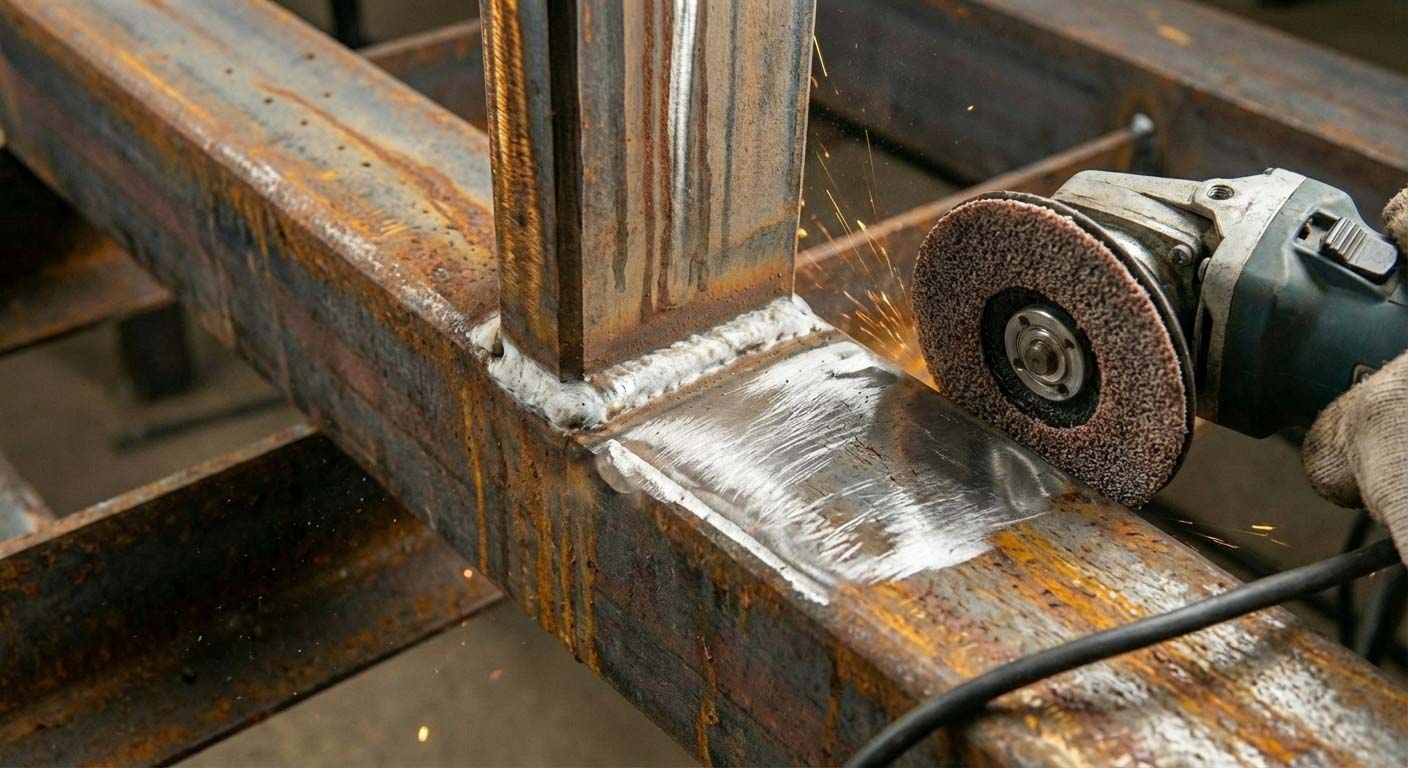
Sand or grind lightly in circular strokes, clean thoroughly, then prime and reseal.
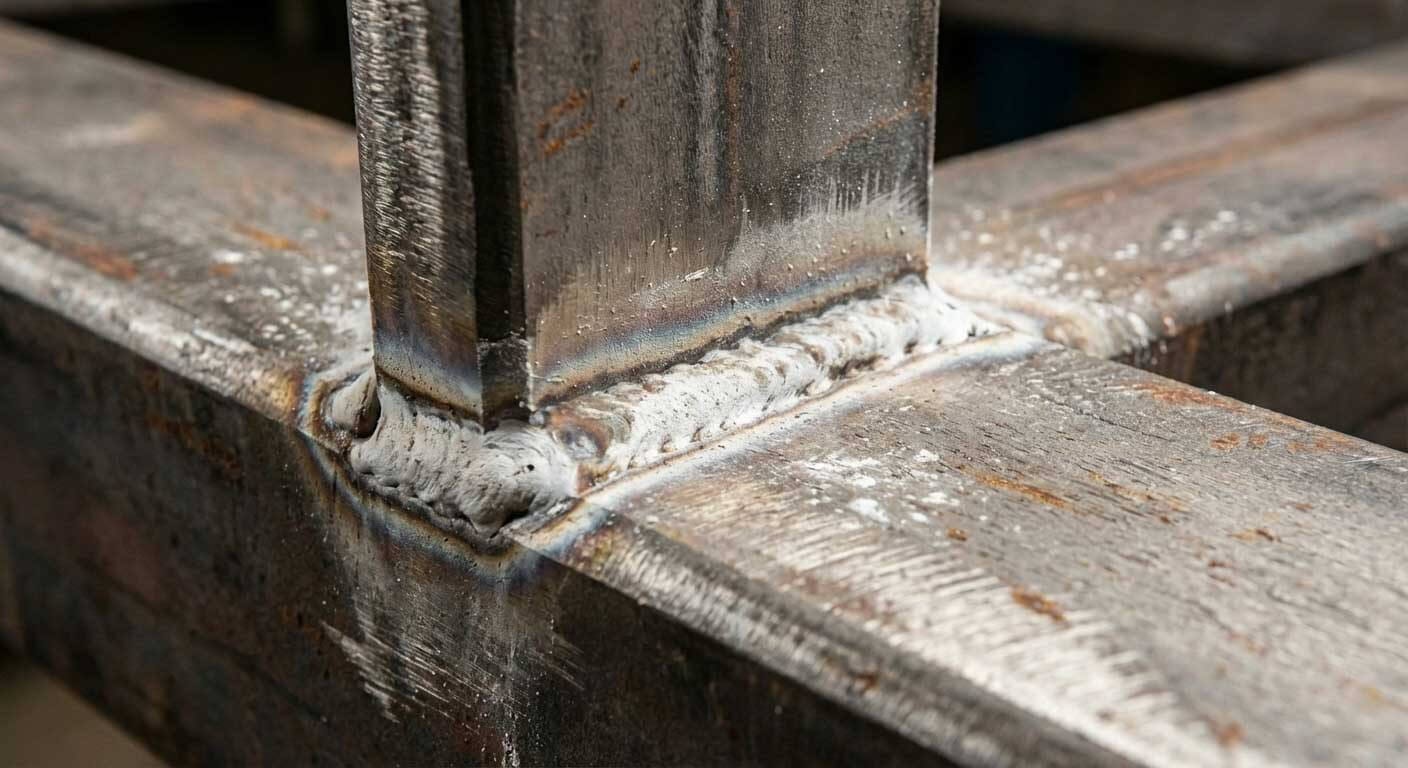
It’s safe to sand back gently and reseal with a DuraGal-compatible coating.
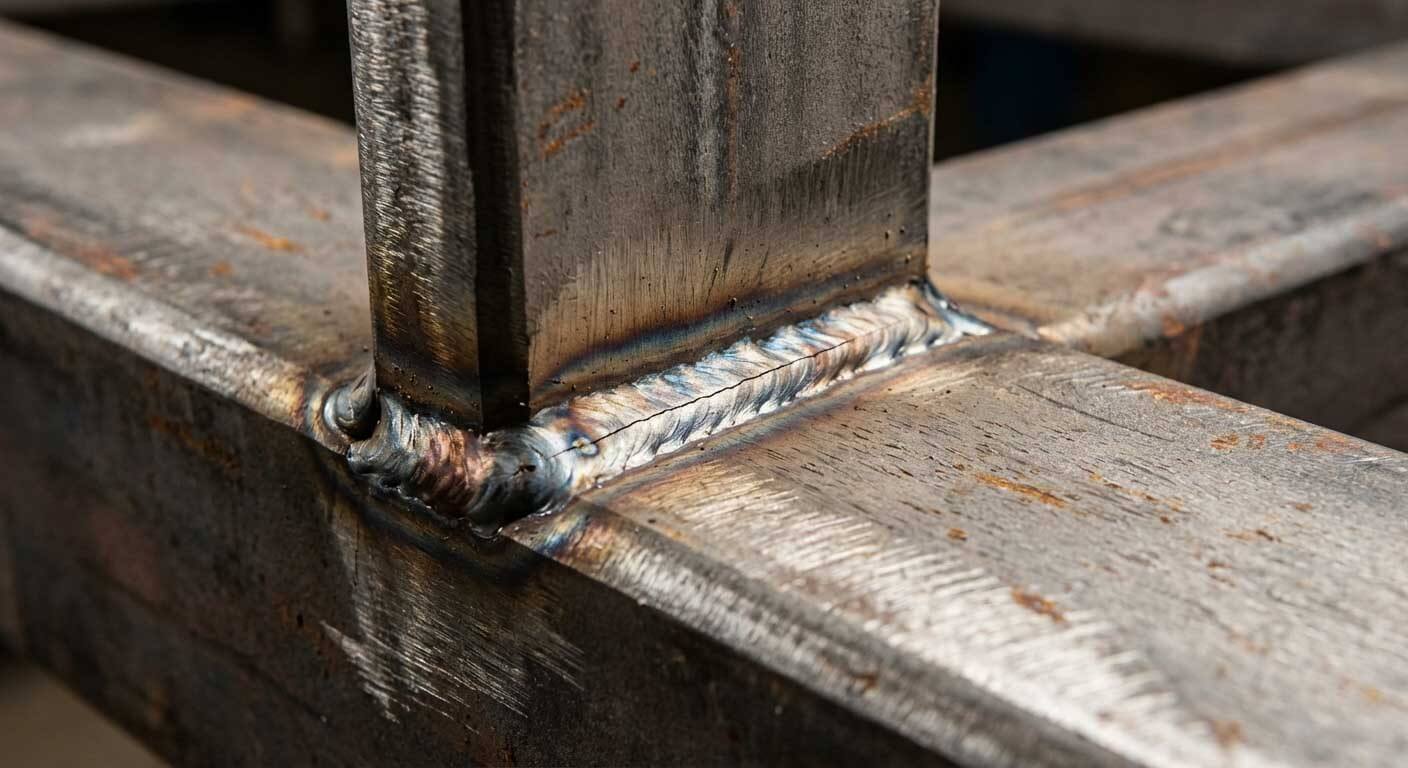
If you spot one, don’t paint over it.
Get the weld repaired professionally before resealing.
The Steel Stable “First Aid Kit
Every stable should have a small maintenance kit with the right tools; think of it as first aid for your building.
Keep these on hand:
- DuraGal® alloy system touch-up paint
- 80 or 120 grit sandpaper or wire brush
- Multi-purpose lubricant (graphite or silicone-based)
- Tube of exterior sealant, Sikaflex, Tremco, or Fuller Ultra Clear.
- 5 m builder’s line + tape measure (for deflection checks)
Five small tools. Countless saved repairs.
| Item | Purpose | How to Use It | Go to section |
|---|---|---|---|
| ColdGal Spray (Zinc-Rich Primer) | Prevents corrosion and restores protection to exposed sections | Wire-brush or sand the rusted area, wipe clean, spray a light coat of ColdGal, and let dry. | Rust prevention |
| Duragal Silver Topcoat | Apply as a topcoat after priming to seal and protect the structure. | Apply after ColdGal to restore the protective alloy layer and colour. | Rust |
| Tube of Exterior Sealant (Neutral-Cure Silicone or PU) | Seals joints, bolt holes, and edges to block water ingress | Run a small bead along base plates, ply edges, or around fixings. Smooth with a gloved finger. | Moisture Control |
| 80 – 120 Grit Sandpaper or Wire Brush | Removes loose residue or damaged coating before resealing. | Use light circular motion; don’t overwork coated or galvanised areas. | Rust Control |
| Graphite or Silicone Lubricant | Keeps moving parts (hinges, sliders, bolts) free of rust and friction. | Apply sparingly to hinges, track wheels, and door slides every 1 – 2 months. | Hardware |
| Builder’s String-Line & Tape Measure | Quick DIY tool for checking straightness or deflection. | Stretch between two points and measure the mid-span gap to detect roof sag or wall lean. | Diagnostics |
Daily Maintenance and Cleaning Equipment
Keeping your stable in good working order isn’t just about structure , it’s about the simple tools that make regular maintenance easy. A few essentials can turn cleaning from a chore into a quick routine that keeps your horse happy and healthy all year round.
Your stable-cleaning kit should include:
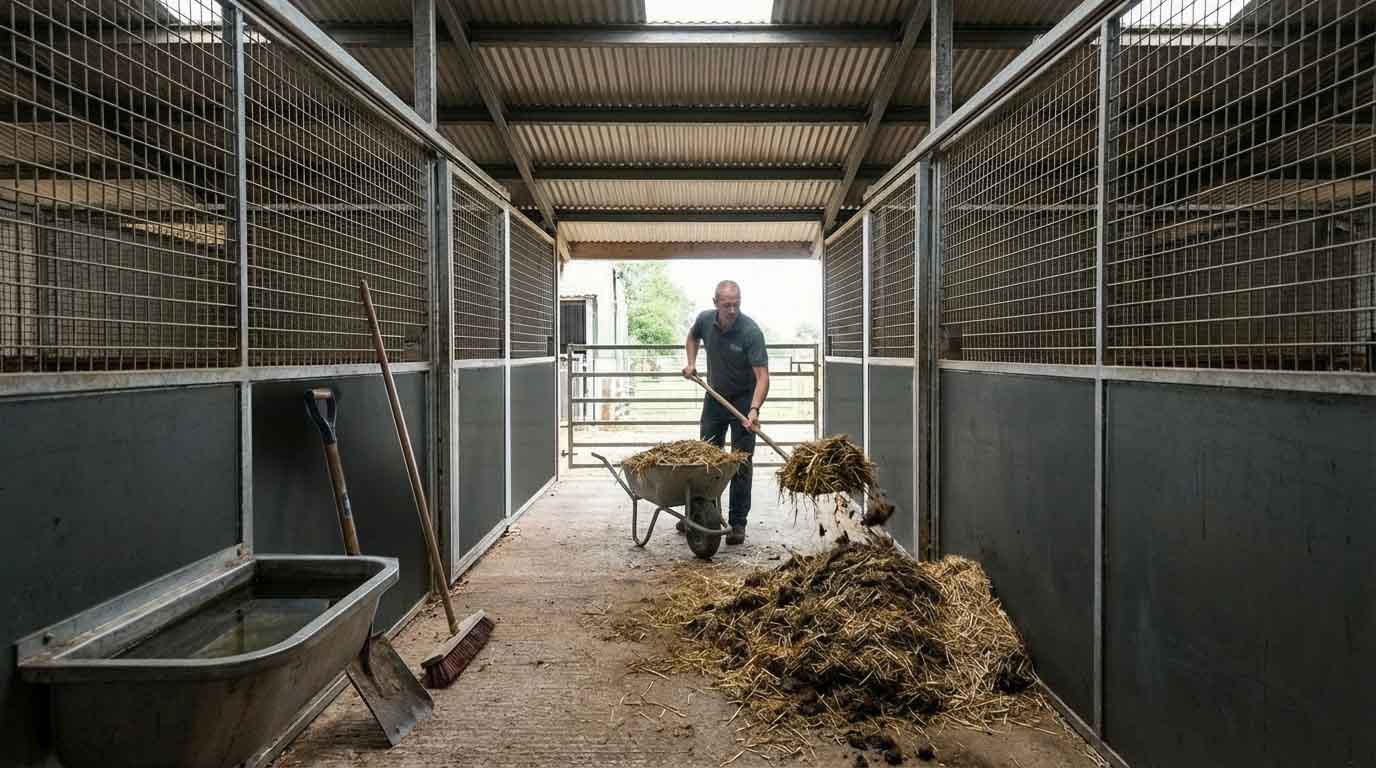
- A sturdy broom for sweeping aisles and clearing out loose bedding or debris.
- A reliable wheelbarrow to remove muck efficiently and transport fresh bedding or feed.
- Water buckets and feed buckets cleaned daily to avoid residue that can be harmful to your horse.
- A pressure washer or hose setup for a thorough clean of walls, rubber matting, and stable doors and windows.
- A small maintenance pouch with proof coating, fabrication touch-up paint, and brushes for minimal maintenance on fittings.
- Disinfectant and mild detergents for a deep clean, keeping surfaces safe and easy to maintain on a regular basis.
Proactive maintenance saves time and prevents costly repairs. Keep your tools close, your routines consistent, and your stable in top condition, clean, dry, and ready for another day in the horse arena.
Steel vs Wood: The 25-Year Value Curve
The protective alloy coating and welded corners deliver 25+ years of service life in Queensland’s inland and coastal climates, with up to 40% lower total ownership cost than timber or HDPE.
| Aspect | Wooden Stable | Steel Stable |
|---|---|---|
| Infestation Resistance | Needs annual treatment | Immune to termites & rodents |
| Fire Safety | Highly flammable | Non-combustible |
| Annual Upkeep | $500 – $2,000 | $100 – $300 |
| Lifespan | 20 – 40 years (high effort) | 50+ years |
When to Call a Builder or Engineer
DIY maintenance keeps you ahead, but serious movement, cracks, or bent members mean it’s time to get professional support.
Call if you see:
- Weld fractures or bent tie rails
- 10 mm+ roof deflection
- Columns separating from the slab
Early intervention keeps a $500 repair from becoming a $5,000 rebuild.
Built to Last, Easy to Keep
Steel stables thrive with small, consistent care. Clean it, check it, and let it breathe; that’s all it asks.
Need a hand or second opinion? Call Morgan if you need help 0405 538 413
When built right and maintained simply, your “Guerilla Steel” stable will outlast decades of horses, weather, and change.
If you have any Stable Buying Questions or want something custom, Give Morgan a call on 0405 538 413, email guerillasteel@gmail.com
Download Your Free Stable Buying Guide
- Questions to ask your stable builder
- Stable system specifications
- Quote planner
700 downloads · last download 2 hrs ago
No spam — just expert tips, offers, and updates from your local stable builders. View our Privacy Policy.