No products in the cart.

Strength You Can See, and Feel Decades Later
Choosing a horse stable builder in Australia isn’t about who has the slickest brochure. It’s about who’s putting real thought into the structure your horses live in, day after day, season after season. Across Queensland and New South Wales, humidity, ammonia, and coastal air can quietly destroy poorly built stables long before their warranty runs out.
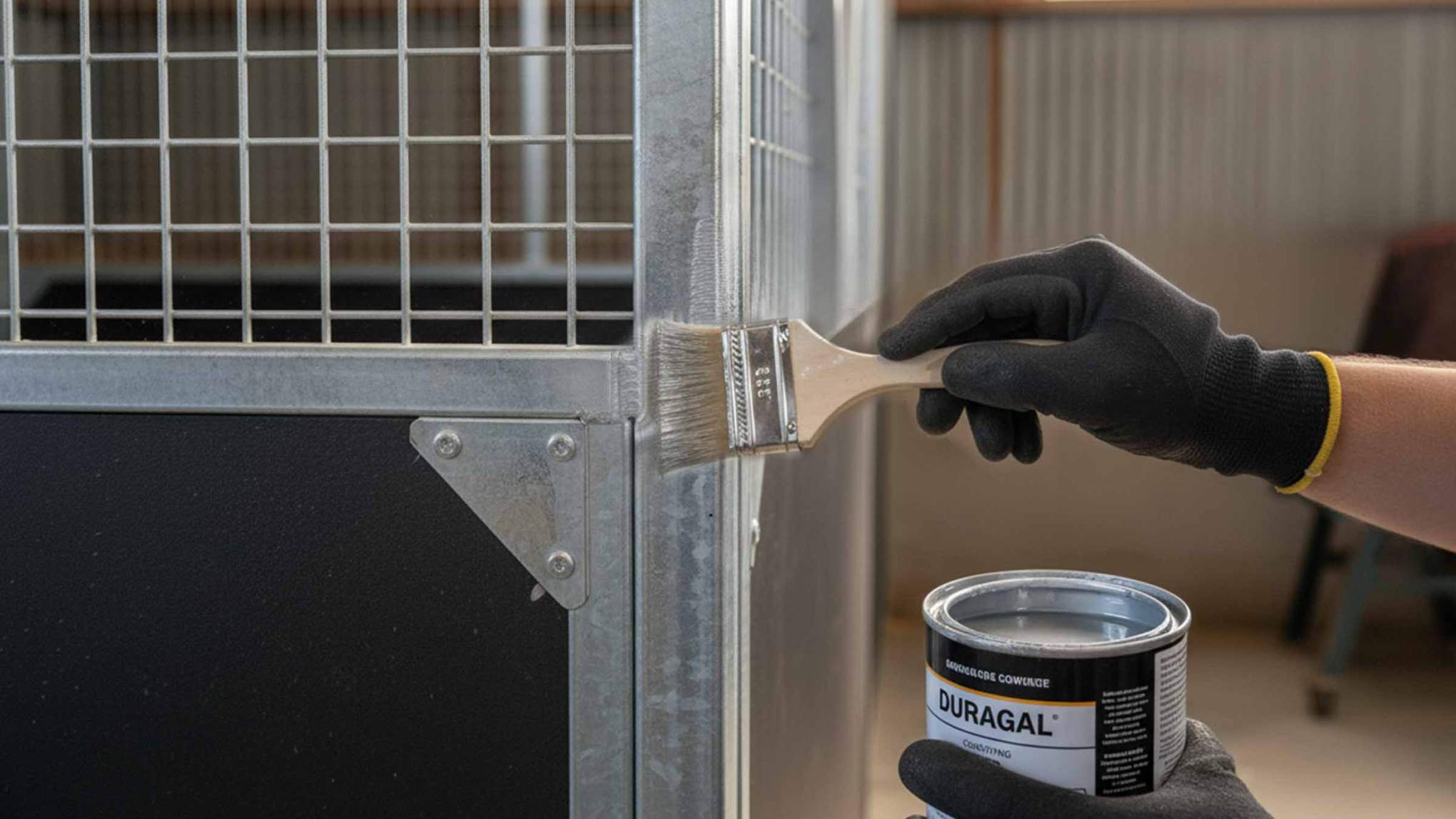
We’ve seen light-gauge, bolt-together imports that look great for the first twelve months, then start rusting around welds and hinges. In contrast, Australian-made Duragal® structural steel, engineered for ammonia and moisture-heavy environments, stays solid for decades. The difference isn’t cosmetic. It’s chemistry and construction.
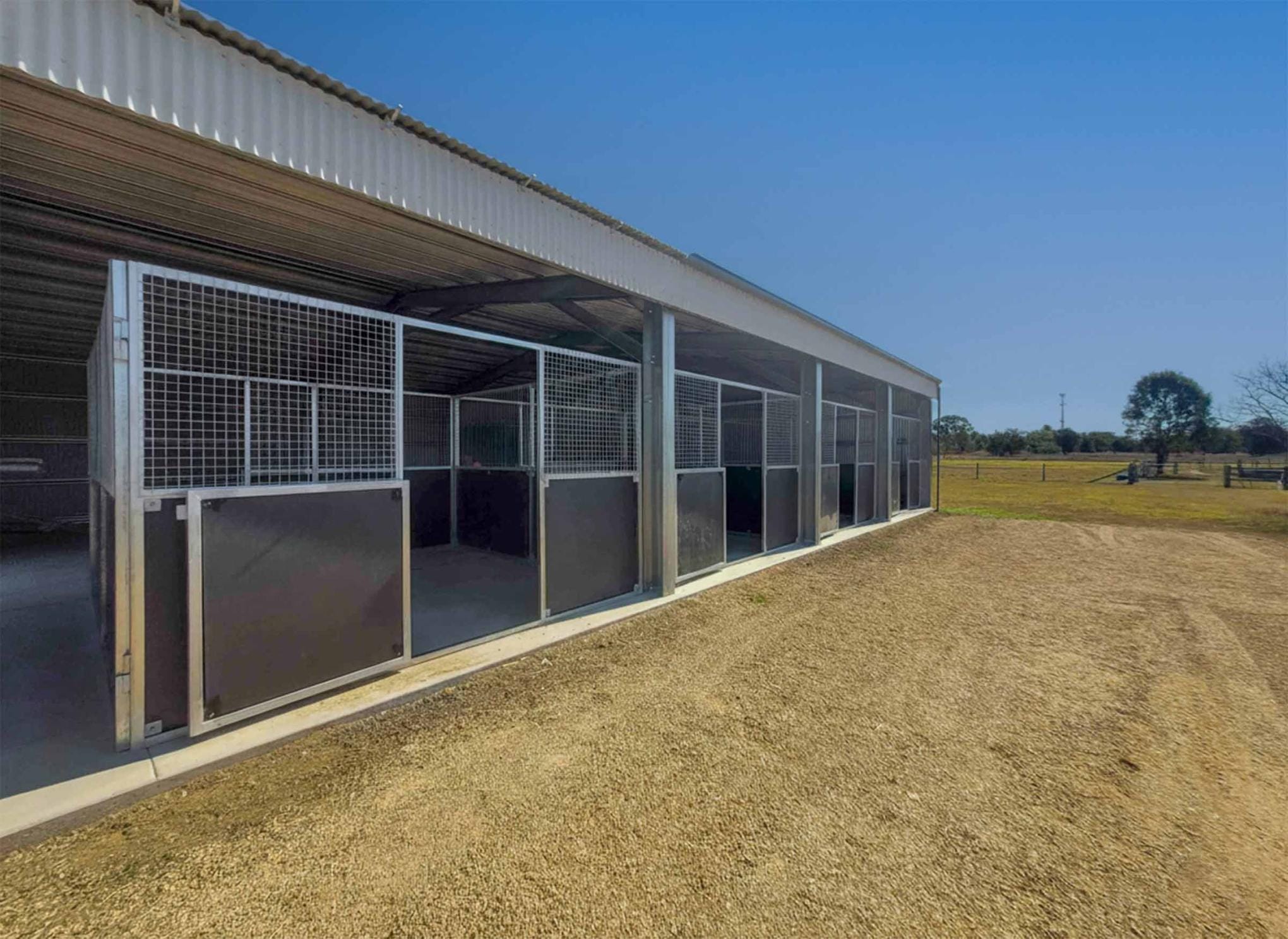
Engineering Standards That Decide Whether a Stable Lasts 2 Years or 20
If you’re comparing stable builders, start here. These are the stable specifications that separate a long-term investment from a short-term compromise.
- Structural Steel: 50 mm RHS Duragal® frames. The alloy coating (zinc, aluminium, and magnesium) resists the chemical corrosion that ruins standard galvanised steel in equine environments.
- Kickboards: 17 mm form ply, rated F17 for impact resistance. Independent testing shows it can withstand the 350, 400 J impact forces typical of a horse’s kick. That’s not over-engineering, it’s animal safety.
- Mesh Panels: 40, 50 mm gaps are tight enough to prevent hoof entrapment while keeping horses connected visually. Good airflow and social visibility lower stress and improve stable harmony.
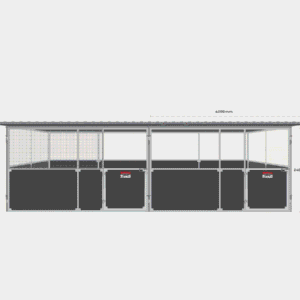
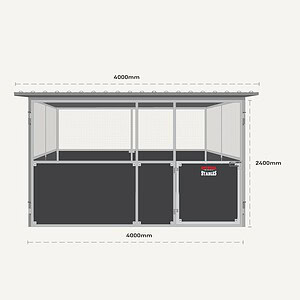
- Roof Height: 2.4 m minimum internal clearance. That extra height allows hot air to rise and escape, keeping stables cooler in humid QLD and NSW climates.
- Overhangs: Minimum 900 mm roof overhang to protect from rain and sun exposure. It’s a small design choice that drastically reduces splash-back, rot, and bedding moisture.
👉 Check our full Base Model Specifications here
Questions That Expose the Difference Between Marketing and Manufacturing
Before you sign anything, ask each builder these questions:
- What grade of steel do you use, and is it Australian-made?
- Are your panels fully welded or bolted together on site?
- What is your standard height and mesh size?
- How do you prepare panels for uneven ground?
- Can you prove the coating or treatment used at weld points?
Keep their answers side by side. The strongest builders won’t dodge specifics, they’ll have drawings, data sheets, and site photos ready.
Grab our Stable Builder Questions PDF a quick one-page guide to compare quotes by steel grade, weld type, mesh size, roof height, and aftercare.

Get the “Questions to Ask your stable builder” guide
Guerilla Steel reveals what stable builders don’t always tell you, and the 5 key questions to ask before you order
No spam – just expert tips, offers, and updates from your local stable builders. View our Privacy Policy.
700 (last download 4 hrs ago)
Prefab vs Custom vs DIY: Which Stable Type Actually Delivers Strength and Scalability?
| Type | Ideal For | Strength & Install | Key Watch-outs |
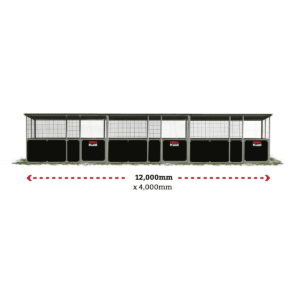
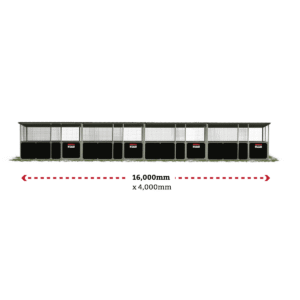
| Prefab Welded Panels | 1, 8 bay setups, fast turnaround | Fully welded, strong, expandable | Confirm steel type and weld quality |
| Custom Barns | Large equine operations or breeding centres | Total layout control, integrated storage | Higher cost, longer construction time |
| DIY Flat-Pack Kits | Handy owners who want to save on labour | Flexible, scalable, cost-efficient | Requires tools and accurate assembly |
| Paddock Shelters | Outdoor shade and short-term use | Simple protection, easy install | Not a full welfare-grade stable |
Prefab welded panels are the most common choice for owners balancing cost, quality, and installation time. They arrive fully aligned and ready to bolt to concrete or compacted base, making expansion or relocation easy later on.

What Duragal® Steel and Welded Frames Do That Imports Can’t
Queensland’s humidity and coastal salt air are brutal on metal. So are the dry, dusty summers inland. That’s why Duragal® alloy-coated steel matters, it’s engineered for these exact conditions.
The combination of welded frames, mesh-top partitions, and elevated rooflines means cooler stables, cleaner air, and calmer horses. You’ll notice the difference: less sweat, less smell, and fewer flies by mid-morning.
It’s not just about comfort, it’s about respiratory health. Proper ventilation prevents ammonia build-up, mould, and dust accumulation that can lead to chronic issues like heaves and skin irritation.
Lifetime Cost Reality: Why Cheap Imports Cost up to 40% More Over Time
Cheaper imported panels often need replacement or repainting within ten years. By contrast, locally manufactured, fully welded steel and form ply systems typically last over two decades with minimal maintenance.
When you calculate cost of ownership, materials, maintenance, and replacement, the difference is clear. Quality steel and ply reduce lifetime costs by up to forty percent compared with low-grade imports or timber structures that degrade in damp conditions.
That’s the quiet payoff of building right the first time. You spend once, and it keeps working for you every day after.
Fabricated in Queensland: The Local Manufacturing Edge You Can See
Every stable from Guerilla Steel is fabricated in a controlled Queensland workshop. That means perfect alignment, consistent weld penetration, and proper coating application before panels ever leave the floor.
It also means faster delivery, easier expansion, and real after-sales support when you need replacement panels or additional bays years later. You’re not chasing an overseas supplier or dealing with mismatched fittings.
Buying local isn’t a slogan, it’s about accountability. When your builder’s only a few hours away, your investment is protected.
Welfare by Design: Shaping Horse Health and Owner Value
A horse stable isn’t just a structure. It’s an environment your horses depend on every day. The right builder will show you not only what they make, but why it’s made that way, steel grade, ventilation design, kick-impact strength, and coating process included.
Don’t buy the cheapest quote. Buy the builder who can prove their work stands up to real Australian weather, welfare expectations, and time.
Designing Your Stable for Decades of Safety and Ease
Don’t gamble on glossy brochures or vague promises. The best way to choose a stable builder is to ask the right questions, before you sign anything.
Download our Stable Builder Questions to Ask PDF checklist. It’s a one-page guide we use with our own clients to help compare quotes line-by-line. It covers the five specs that matter most: steel grade, weld type, mesh size, roof height, and aftercare.
Or, if you’ve already got quotes in hand, send them through. We’ll walk you through how our fully welded, 2.4 m high Australian-made panels stack up, and show you exactly where corners might be getting cut.
Because “Australian-made” means nothing without engineering to prove it.
👉 Ready to start your stable project? Request a quick quote today and get a clear plan from local and trusted stable builders.