No products in the cart.

You’ve bought acreage, maybe with one or two horses, and you’re realising the space could do more than just hold paddocks. Agistment, boarding horses for others, is one of the most straightforward ways to turn rural land into an income stream. But success here isn’t about luck or filling stalls; it’s about smart structure, planning, and scale. The most profitable setups start small, use modular design, and phase growth.
This is how owners across Queensland, New South Wales and Victoria turn new blocks into viable, low-risk agistment properties, without biting off more than they can chew.
What to Know Before Starting Agistment on Your Acreage
Agistment isn’t a “build it and they’ll come” model. It’s a business, even if it starts as a side project.
Before you fence a paddock or buy a bay, map out what success actually looks like for your property.
Ask yourself:
- How many horses could your land comfortably support long-term (not just physically, but financially and operationally)?
- Do you plan to stay small, or could this evolve into a commercial operation later?
- Who is your likely boarder, friends, locals, travelling riders, or mixed stock owners?
Your answers determine the layout, the materials, and the workflow you’ll need. A property that’s perfect for two horses can become a daily grind at ten if it isn’t set up for flow.
Key Things to Confirm Before You Build or Board Horses
There are several layers of regulation that can apply when horses and income mix.
Before you install permanent infrastructure, check with your local council and relevant authorities about:
- Zoning and land use approvals. Some rural zones limit the number of horses or require a development approval (DA) for commercial use.
- Building and site works permits. Even modular steel structures may need certification or engineered drawings for submission.
- Biosecurity and livestock registration. Rules vary by state and can include Property Identification Codes (PICs) or specific reporting requirements.
- Insurance and liability coverage. Public liability and agistment-related coverage protect against property damage or injury.
- Tax implications. Income from agistment may be assessable, and costs may be deductible depending on your business structure.
Each region, and even each council, handles these differently. Don’t assume what works for your neighbour applies to you. It’s worth seeking advice from qualified professionals, accountants, local council officers, and insurance brokers familiar with equine operations, before spending money on materials.
Paddocks, Fencing and Water Setup for Small Agistments
Start with the land before you think about buildings. Your paddocks will determine how efficiently you can operate later. A simple rule of thumb is around 300 square metres per horse, though local conditions, grazing quality and soil type can change that dramatically. Focus on these essentials:
- Fencing: Strong, visible, and safe, post-and-rail or mesh with hot wire for separation.
- Access: Keep paddocks close to the main driveway. Trucks and floats need clear turning circles and stable ground year-round.
- Drainage: Build up high-use areas like gateways, troughs and laneways with compacted gravel. Poor drainage is the fastest way to lose boarders and horses’ health.
- Water: Trough access to every paddock, ideally fed from a central line for ease of monitoring and cleaning.
At this stage, your goal is to keep capital low but quality high. You’re setting the bones of your operation.
Modular Stable Design for Growing Horse Numbers
Once paddocks and water systems are working, you can add infrastructure that justifies higher agistment rates, shelter and stables.
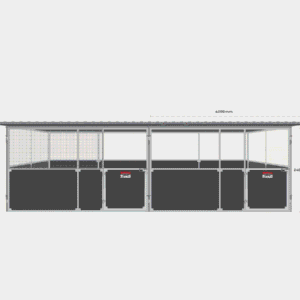
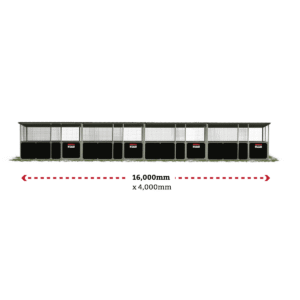
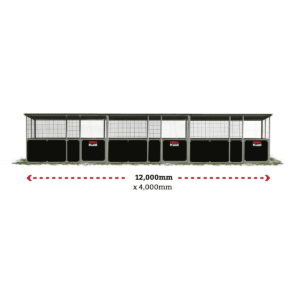
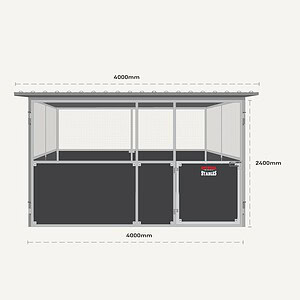
Modular steel systems are the most practical choice for new acreage operators. They install quickly, require minimal site works, and can be relocated or expanded as you grow.
Start with two to three bays. That’s usually enough to manage a mix of personal and client horses without overwhelming one person.
Design considerations:
- Airflow and light: 2.5m height minimum, mesh or open tops for natural ventilation, critical in Queensland humidity.
- Aisles: At least three metres wide for wheelbarrows and safe horse movement.
- Surfaces: Compacted gravel bases or rubber mats keep drainage functional and reduce maintenance.
- Future-proofing: Choose modular systems where panels bolt and unbolt easily, so your first structure can grow into a breezeway, tack area or wash bay without rebuilds.
A common early misstep is pouring a permanent slab too soon. Unless required by local code, start with compacted gravel and mats, cheaper, drier, and easier to modify later.
Efficient Workflow – Layouts That Save Time and Labour
Agistment income is only as good as the time it takes to earn it. The smartest builds are designed around daily efficiency, how you feed, clean, and move.
- Central feed and tack areas: Reduces walking and doubles as a workflow hub.
- Straight paths: Line up stables, paddocks and manure zones to minimise backtracking.
- Gravity drainage: A slight fall across yards keeps rain from pooling in front of stalls.
- Low-maintenance surfaces: Gravel, mesh or concrete aprons around stables prevent mud and reduce cleaning.
- Lighting and power: Plan early for hose points, lights and outlets; retrofitting utilities can cost more later.
Owners running five to ten horses solo can save several hours a week just by designing the site to work in straight lines rather than circles.
Agistment Start up Costs, Pricing and Realistic ROI Expectations
Small-scale agistment can be profitable if you manage capital and time carefully.
While numbers vary by region and service level, here’s what many entry-level setups experience:
- Startup: Around $15,000, $25,000 for fencing, drainage, and two to three modular bays.
- Running costs: Feed, bedding, and insurance average $1,500 per horse per year.
- Rates: $25, $50 per week per horse, depending on facilities and services.
At five horses, you’re generally covering maintenance and loan interest. At ten, most small operators see a return on setup costs within two to three years.
The key advantage lies in modular scalability, you can add income capacity one bay or paddock at a time without losing prior investment.
Planning, Permits and Professional Advice to Get Right Early
Agistment sits between lifestyle and business, and it’s best treated as both.
Before scaling up, consider:
- Speaking with an accountant about income reporting and tax structuring.
- Consulting your local council about operational permits and any livestock caps.
- Reviewing your insurance coverage for both property and client liability.
- Confirming water rights and access if sharing bore or tank systems.
Each professional will help you prevent small oversights that often become costly down the track.
From Paddock to Profit: Building a Scalable Agistment Operation
The best agistment operations evolve, not explode. Start simple, prove the model, then scale.
Your land doesn’t need twenty stalls to generate return; it needs a system that grows in sync with your confidence, reputation and client demand.
Guerilla Steel Stables builds for that path. Modular by design, every structure is a foundation for the next phase, so your first bay, done right, can become a self-sustaining agistment business with no wasted effort.
Build once, build smart, and make the land pay its way while keeping your workload in check.